 Uzbek cuisine is very simple and based on basic ingredients such as meat, rice, vegetables and yoghurt while, for obvious geographical reasons, fish is almost non-existent. In general, dishes are high in calories, hearty and abundantly spiced.
Bread, nan, plays a basic role. It comes in the form of a more or less thin loaf, depending on the area. Whatever its shape and size, the bread is always baked in the tandoori oven and, like a trademark, the centre of the loaf is 'stamped' with a stencil, a symbol of good luck. The national dish is Plov, always present at weddings and important festivals. Rice and meat are the basis of this dish, and each family has its own secret recipe. Furthermore, despite being a Muslim country, alcohol is permitted in Uzbekistan, and every occasion is good for celebrating with vodka. The desserts, made with honey and dried fruit, are clearly Turkish in origin.
Have we piqued your curiosity? Then here is a little guide to what is magic in Ubzekista: typical dishes, tips and curiosities!
10 typical dishes of Uzbekistan
1 - Plov
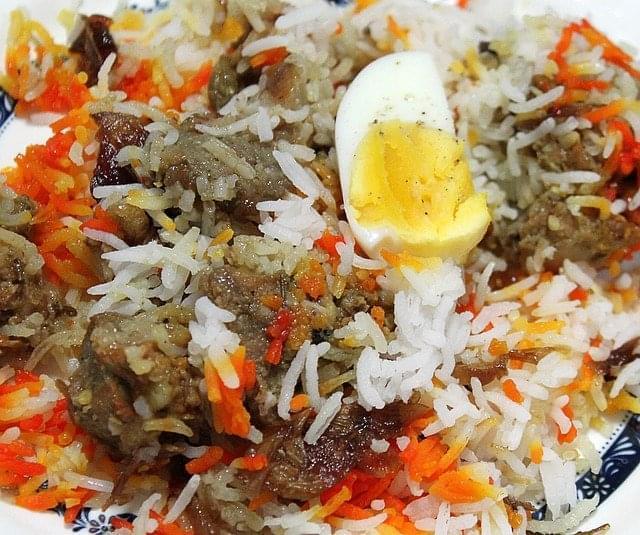 Thepride of the national cuisine is Plov, served everywhere and in many variations. It consists of rice simmered in zirvak, a gravy made from fried or stewed meat (usually mutton or goat), carrots, onions, and vegetables that vary according to location: cumin, sultanas, chilli, etc.
It is served on a large platter placed in the middle of the table: a mountain of rice sprinkled with the gravy and pieces of the various ingredients. As a garnish, firmed quail eggs cut in half are often used. It is certainly a very hearty and not particularly light dish and is always present at important events such as weddings, parties and meetings!
Recommended for: lunch, dinner
Average cost: €8.00
Main ingredients: rice, meat, vegetables, spices
2 - Samsa
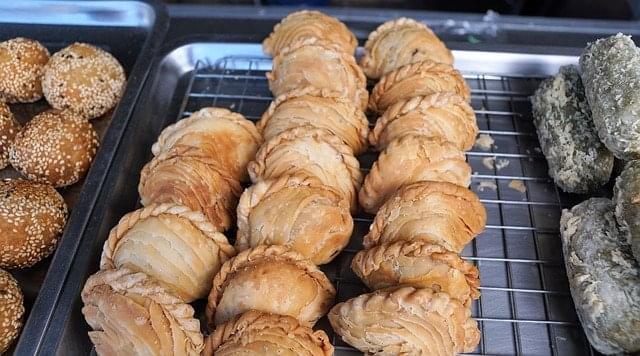 Puff pastry dumpling filled with meat, chopped onions and vegetables (pumpkin, cabbage, nuts, potatoes, mushrooms...) baked in the tandoori oven, a traditional clay oven, cylindrical in shape, heated with charcoal, a very obvious legacy of contamination with Indian culture.
Samsa can be found everywhere. They are sold at market stalls to be bought and eaten immediately on the spot as a snack at any time of the day. It is not uncommon that they are also served as an appetiser in restaurants at the beginning of a full meal. It is a must-have snack since it is served on the Uzbekistan Airlines flight and also on the express train from Samarkand to Tashkent.
Recommended: snack
Average cost: €0.80
Main ingredients: puff pastry, meat, onions
3 - Bread
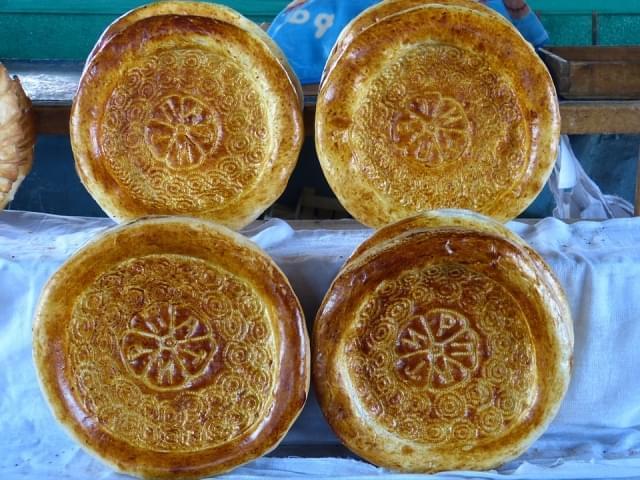 National pride after plov is bread. Bread is sold and served on the table in its original loaf form. Depending on the area of production, it takes on different connotations: in the west (e.g. Khiva) it is thin and resembles our piadinas more, as one moves eastwards (Samarkand) it resembles a flatbread with raised edges.
It is cooked in the tandoori oven, a stone oven of Indian origin that is heated with embers. Once the temperature is reached, the dough is placed on the burning walls and in a few minutes it is ready.
The surface of the bread is often sprinkled with poppy seeds but, above all, the loaf is stamped (a sort of trademark) with a stencil with nailed ends, reproducing a circular symbol of good luck and prosperity, a reference to suzani, the typical decoration of Uzbek carpets and mandalas.
Recommended for: always
Average cost: €0.40 per kg
Main ingredients: flour
4 - Dimlama
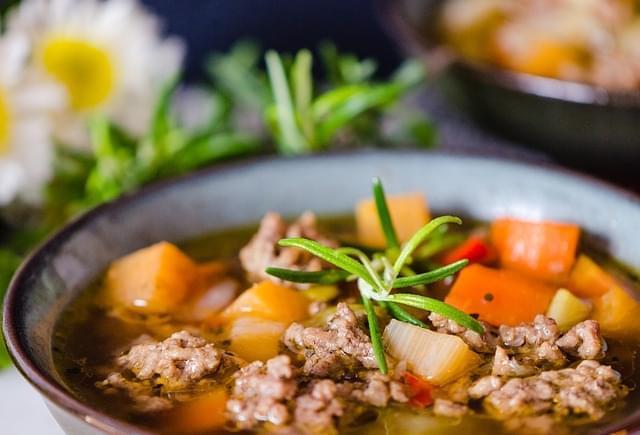 Dimlama is a Turkish stew of lamb or mutton (sometimes also veal and beef) and vegetables cut into large pieces. Vegetables for Dimlama include, besides potatoes and onions, carrots, Savoy cabbage, aubergines, tomatoes and peppers. Everything is abundantly spiced with garlic, cumin, herbs and spices, primarily dill.
The various ingredients are placed in layers in a well-sealed pot and everything is slowly cooked in their own juices. Dimlama is usually cooked during spring and summer when there is a wide choice of vegetables. It is served in the centre of the table on a large plate and eaten with a spoon.
Recommended for: lunch, dinner (main course)
Average cost: €8.00
Main ingredients: meat, vegetables
5 - Shaslik
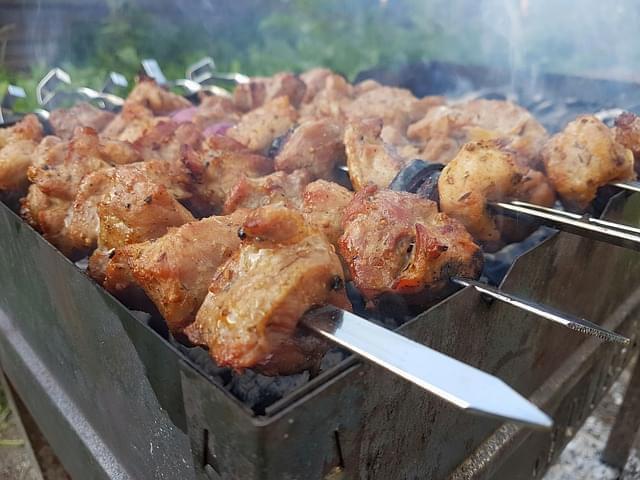 Similar to kebabs, Shaslik consists of pieces of mutton, lamb, chicken or goat meat cooked on a spit or over embers. The pieces of meat are served skewered on steel skewers and topped with an exorbitant amount of raw onion slices.
There is also a version called lyulya, which involves a mixture of mutton and spices.
Shaslik is usually accompanied by Adjika, a spicy red sauce made from chillies.
Recommended for: lunch, dinner
Average cost: €6.00
Main ingredients: meat
6 - Manti
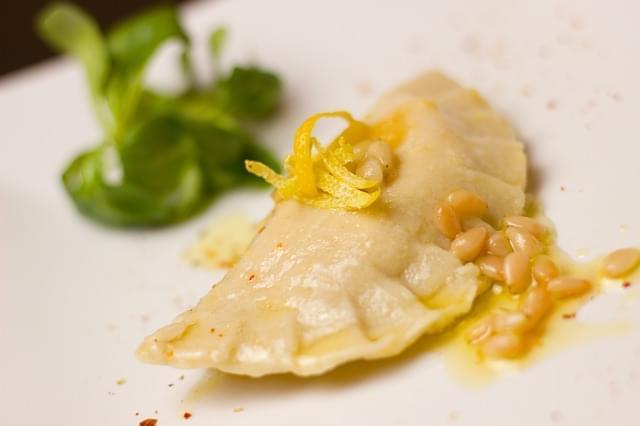 Manti are large steamed dumplings filled with meat (lamb or beef) minced and marinated with onion and various spices. They are served sprinkled with dill and sour cream.
There is no single recipe for the filling, so it is impossible to know the flavour of what will arrive on your plate. The same can be said for shape and size, which vary from place to place and from home to home. Both in shape and taste they are very similar to Chinese steamed dumplings and Japanese gyoza.
Recommended for: lunch, dinner
Average cost: €3.00
Main ingredients: noodles, meat
7 - Lagman
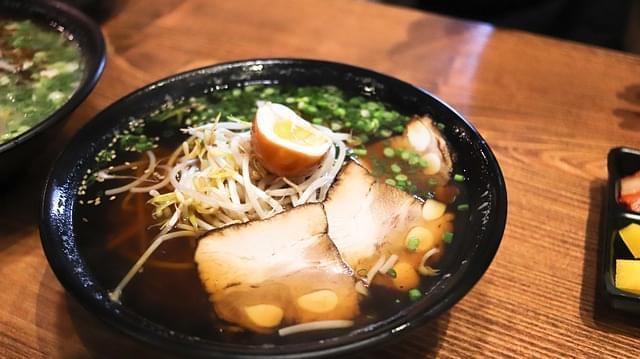 Noodle soup, chopped meat (beef or lamb) and vegetables (tomatoes, peppers, potatoes, onions). Obviously all generously spiced with herbs and flavourings. Tradition dictates that the noodles must be handmade.
It is served portioned in individual bowls for each diner. Lagman can be seen as a Central Asian version of Japanese ramen.
Recommended for: lunch, dinner
Average cost: €2.00
Main ingredients: meat, noodles, broth
8 - Shurpa
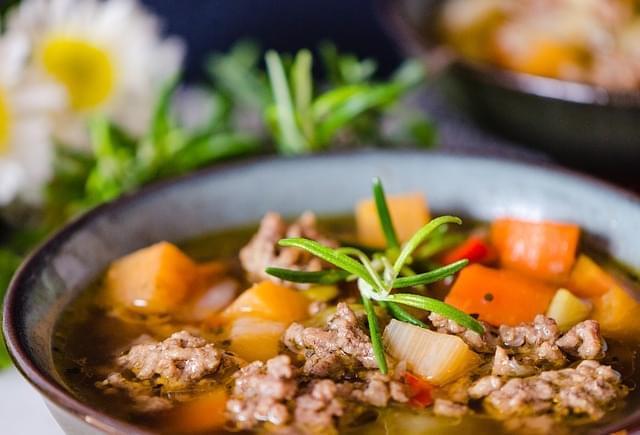
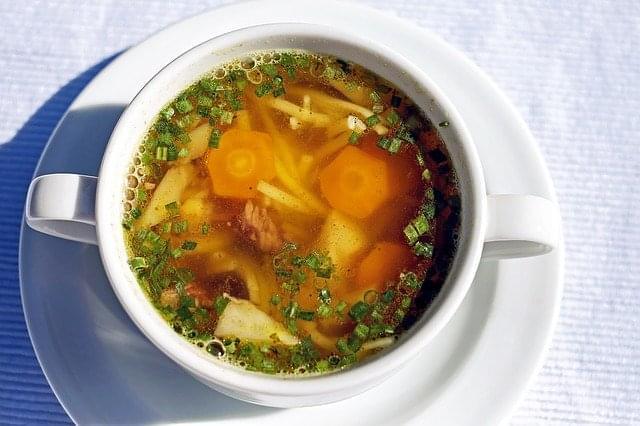 Shurpa is a very thick soup made of meat (lamb or mutton), potatoes, various coarsely chopped vegetables (tomatoes, carrots and onions), herbs and oriental spices.
It is a rather fatty dish, therefore very calorific and invigorating, suitable for the harsh winters. Due to its nutritional characteristics, it is often served to convalescent and still debilitated people to promote healing.
There are two versions: Kaytnama made from fresh meat and Kovurma made from fried meat. The first option, which is healthier and lighter, involves boiling the meat and adding the raw vegetables to the broth and cooking it on a low, slow flame; in the second version, both the meat and the vegetables are first fried and then added to the broth (prepared separately).
Recommended for: lunch, dinner
Average cost: €3.00
Main ingredients: meat, vegetables, broth
9 - Bademjan
 Uzbek tradition dictates that the meal is opened by an appetiser preceding the various courses, and this appetiser generally consists of a small salad.
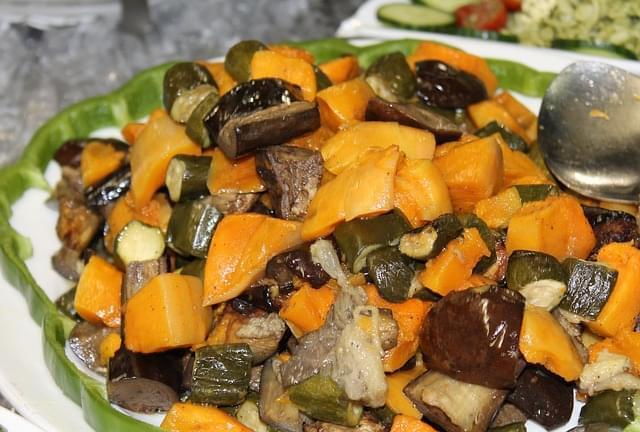
Of the various salads, Bademjan is the most popular. A salad of baked or fried aubergines mixed with slices of radish and thin strips of pepper. All laid on a bed of fresh salad, dressed with oil and sprinkled with parsley. A tasty and appetising dish. Bademjan, like all salads, is served in the centre of the table in a rather small plate so that all diners can enjoy a little without spoiling their appetite for the main course.
Recommended for: lunch, dinner
Average cost: €1.50
Main ingredients: aubergines, radishes, peppers
10 - Achichuk salad
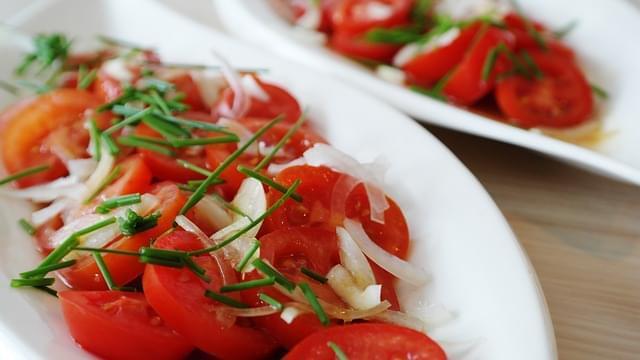 Another typical dish served as an appetiser is the Achichuk salad. Very similar to salads found in North Africa and the Middle East, the basic ingredients are tomatoes, cucumbers and raw white onions. All dressed with oil and the inevitable spices.
For a more substantial version, it is sometimes served with chunks of low-fat cheese similar to primo sale or feta. A light, healthy and completely vegetarian option, but still tasty and delicious.
Recommended for: lunch, dinner
Average cost: €1.20
Main ingredients: tomatoes, cucumbers, onions
Typical desserts from Uzbekistan
There is not much of a pastry culture in Uzbekistan. The few sweets that can be found are basically based on dried fruit, honey, sugar and egg whites. Of Turkish and Middle Eastern derivation, they are obviously very sweet, sometimes cloying.
At the table, they are mostly served as single portions as biscuits, while at the market, one can find real cakes/biscuits of dough that are cut and sold by weight.
1 - Halva
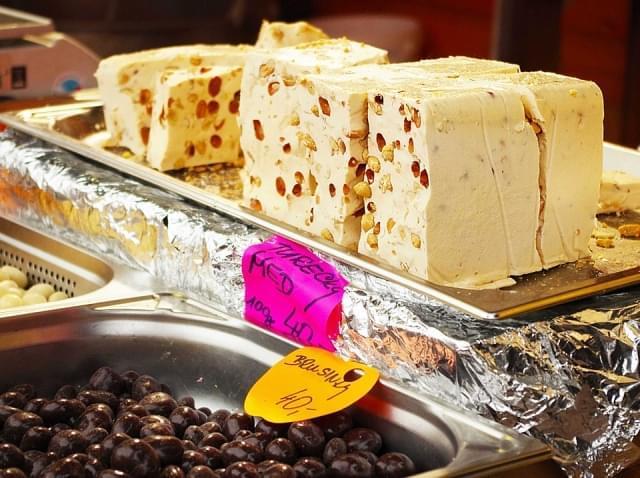 Halva is a popular cake in both Uzbekistan and neighbouring Tajikistan. It is a soft dough composed of sugar syrup, egg whites and sesame seeds.
The preparation involves kneading the sugar together with the egg whites, pulling and stretching it repeatedly until it turns white. Once the sweet mixture has reached the desired consistency, the sesame seeds (and sometimes also pieces of dried fruit such as almonds, walnuts and hazelnuts) are added. The dough is then placed in trays and allowed to solidify. The result is whitish, sticky bricks displayed on market stalls. To the eye, it looks very much like the many elaborate and flavoured nougat variants that we now also find at home.
Average cost: €2.00 per 100 grams
Main ingredients: sugar, egg whites, sesame
2 - Dried fruit
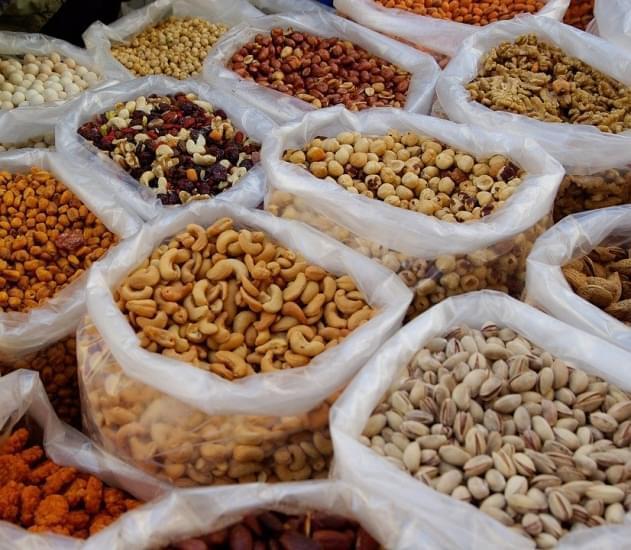 As in all Maghreb and Middle Eastern countries, dried fruit occupies a predominant place in the homes of the Uzbeks, who consume it widely.
At the market, there are stalls selling exclusively dried fruit, by weight or even in mixed, pre-packaged trays for use as gifts. Any kind of fruit can be found in dried form: from the common figs and dates to the more unusual (to our eyes) kiwi, apricot, melon, etc.
There is, of course, no shortage of real dried fruit: walnuts, cashews, almonds, pumpkin seeds, sunflower seeds, etc. The latter are bought in small quantities and eaten on the spot. It is not uncommon to meet Uzbeks walking around the market or on the street munching on seeds as a snack.
Average cost: from €1.00 per kg
Main ingredients: figs, dates, walnuts, sesame, sunflower seeds, almonds, pumpkin seeds, hazelnuts, etc.
3 - Ciak Ciak
Ciak Ciak is a typical cake of Tartar origin, consisting of a mixture of eggs and flour flavoured with vodka.
From the dough, broken noodles are made, to be fried in boiling oil. Once cooled, the mixture is held together by honey, melted with sugar in a saucepan, and finally covered with dried fruit grains. It is very similar to Struffoli, a Neapolitan Christmas tradition, and Cicerchiata, prepared at Carnival in central and southern Italy.
Average cost: €0.50 per 100 grams
Main ingredients: eggs, flour, vodka, honey
Drinks and liqueurs: what we drink in Uzbekistan
Although Uzbekistan is a Muslim country, most Uzbeks drink alcohol.
Beer is among the most consumed drinks, but vodka is their favourite alcoholic beverage.
Among non-alcoholic drinks, tea is always present on Uzbek tables. Green tea is served as a sign of hospitality, while black tea is served with samsa (bread and fritters). Tea is such an important drink in the country's tradition that the 'Choyxona', the tea house, was established, where men and women gather to make important decisions.
1 - Vodka
In keeping with good Russian tradition, the Uzbeks favour vodka to toast and celebrate. This spirit is not only used to celebrate events, festivals and special occasions; often vodka even replaces normal meal drinks, especially when there are guests at the table.
The Uzbeks have inherited from Russia the tradition of how one should toast with vodka. First the vodka should be downed in one gulp and then the glass should be thrown over one's shoulder as a sign of good wishes and good luck.
Average cost: €2.30 per bottle
Main ingredients: alcohol
2 - Beer
Widespread on Uzbek tables is beer. The most widely drunk beer in Uzbekistan is Baltika, whose head office is in St Petersburg and is practically unknown in Italy. It is the largest beer producer in Eastern Europe and the second largest in Europe, after Heineken.
Baltika started out under the USSR as a state-owned industry and was privatised after the fall of the wall. You can taste different types of Baltika beer indicated by a number ranging from 0 to 10 according to alcohol content.
Average cost: €1.00 on tap
Main ingredients: malt, barley, hops
3 - Tea
Tea,green or black, is the symbol of hospitality in Uzbekistan. That is why, at the end of a meal, it is a tried and tested custom for a pot of it to be brought to the table. Uzbek tea has a completely different taste from the bagged tea we are used to drinking in Italy.
Uzbek tea is brewed in a two-tier teira with fresh leaves and has a particularly bitter taste. It should be drunk slowly and it is preferable not to sweeten it. For those who like things sweet, however, crystals of brown sugar are served to dissolve in the drink.
Average cost: €0.20
Main ingredients: tea
4 - Katyk
Katyk is a drink made of yoghurt, water and salt, very similar to ayran originating in Turkey and also popular in the Balkans.
Katyk is normally made from cow's milk, but the type made from goat's milk is also widespread. Depending on the milk used and how it is processed, it can have a thicker and more solid consistency or a more liquid and lighter one. For the same reasons, it can have a more or less strong flavour, ranging from sweetish to smoky.
Katyk is usually served very cold to accompany grilled meat or rice dishes as it is considered the ideal drink to counteract the burning sensation caused by very spicy food.
Average cost: €0.20 per glass
Main ingredients: yoghurt, water, salt
Tips and trivia: where to eat and what to avoid
The national dish, Plov, has numerous variations that vary from area to area but also from family to family, each jealously guarding its secret recipe handed down through generations.
Uzbeks eat in typical restaurants and consume snacks in markets. For tourists, it is advisable to eat in restaurants specially designed for them where there is no à la carte menu but the same meal is served for everyone: entrèe with salad, soup, stewed or grilled meat main course and a sweet. The loaf of bread is brought whole to the table and must be strictly broken by hand (knives, by the way, are almost never present). In addition, there is always a sink at the entrance to the restaurants so that you can wash your hands as soon as you arrive without having to queue in the toilets. Finally, there is a growing tradition in Samarkand of eating in private homes that offer typical dishes cooked 'in the home style'.
Beware of water: always drink only bottled water and also use it to brush your teeth. For the rest, there are no special precautions, but be aware that all dishes are always very spicy. You have to get used to it and adapt.