It is the third most important city in Spain and its popularity continues to grow and it is now one of the most popular summer destinations because of the many things to do. When it comes to beauty, culture, nightlife and amazing gastronomy, not to mention the sea, Valencia is second to no other Iberian or European metropolis and is indeed a destination for everyone!
So let's discover together what to see in Valencia, with this guide with practical tips on the city!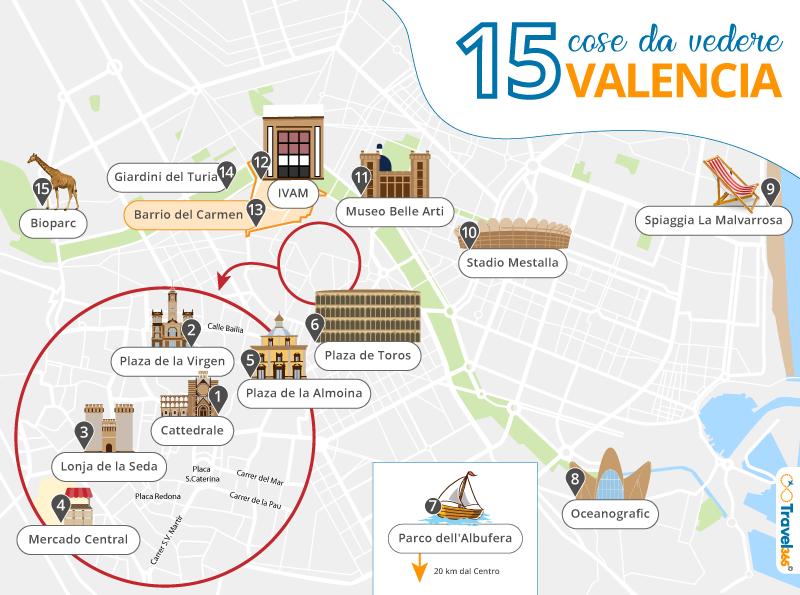
Looking for a hotel in Valencia? We have selected the best offers on for you.
1 - Cathedral
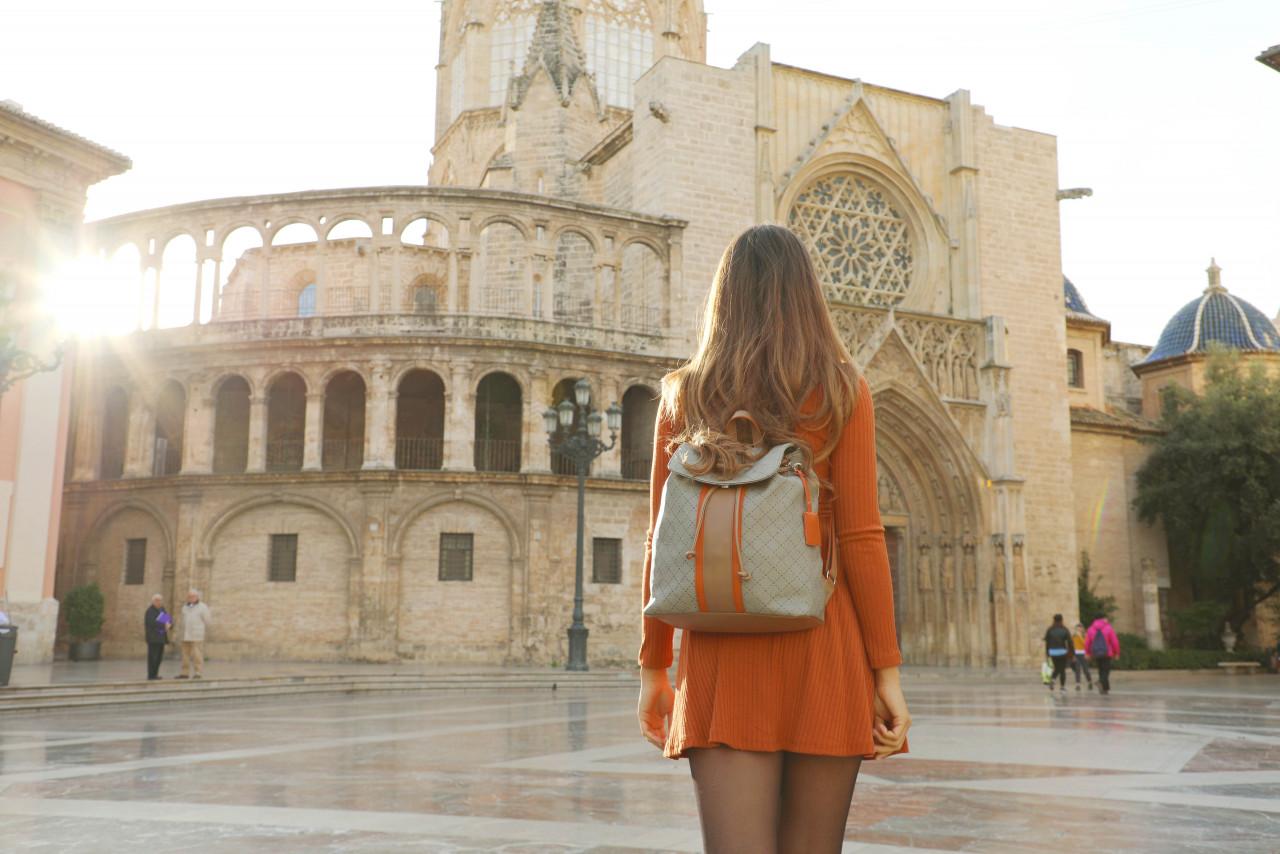 Thenerve centre of Valencia's historic centre is its famous Cathedral, Spanish name La Seu de València, dedicated to the Assumption of Mary and built at the behest of James I. Embellishing it are the three doors, built in three different architectural styles, which provide access to the interior of this historical marvel. Inside, one cannot fail to see the allegedly legendary Holy Grail, the chalice where Jesus drank at the Last Supper.
The uniqueness of this splendid cathedral lies in its past and its mixture of styles: it was built on the site of a Roman temple dating back to the 13th century B.C. but, on the arrival of the Arabs, it was converted into a mosque; over the centuries it underwent many changes, until it became what we can visit today. All that remains is to decide the gateway to the fabulous Cathedral: the Baroque Puerta del Los Hierros, the Romanesque Puerta del Palau or the Gothic Puerta de los Apostoles?
Climbthe Miguelete: this is the Cathedral's bell tower, with its peculiar staircase that narrows as you ascend. Eventually you will find yourself at the top where some of the oldest bells in Spain still ring.
Practical info: directions, times and prices
How to get there: in Plaça de l'Almoina, in the historical centre. Nearest metro Alameda (lines 3, 5, 7 and 9). Get off at the station and walk about 12 minutes -
Opening hours: Mon-Sat 10:30 until 17:30 or 18:30 depending on the period, Sun from 14:00
Ticket price: full price €3.00, reduced €2.00
2 - Plaza de la Virgen
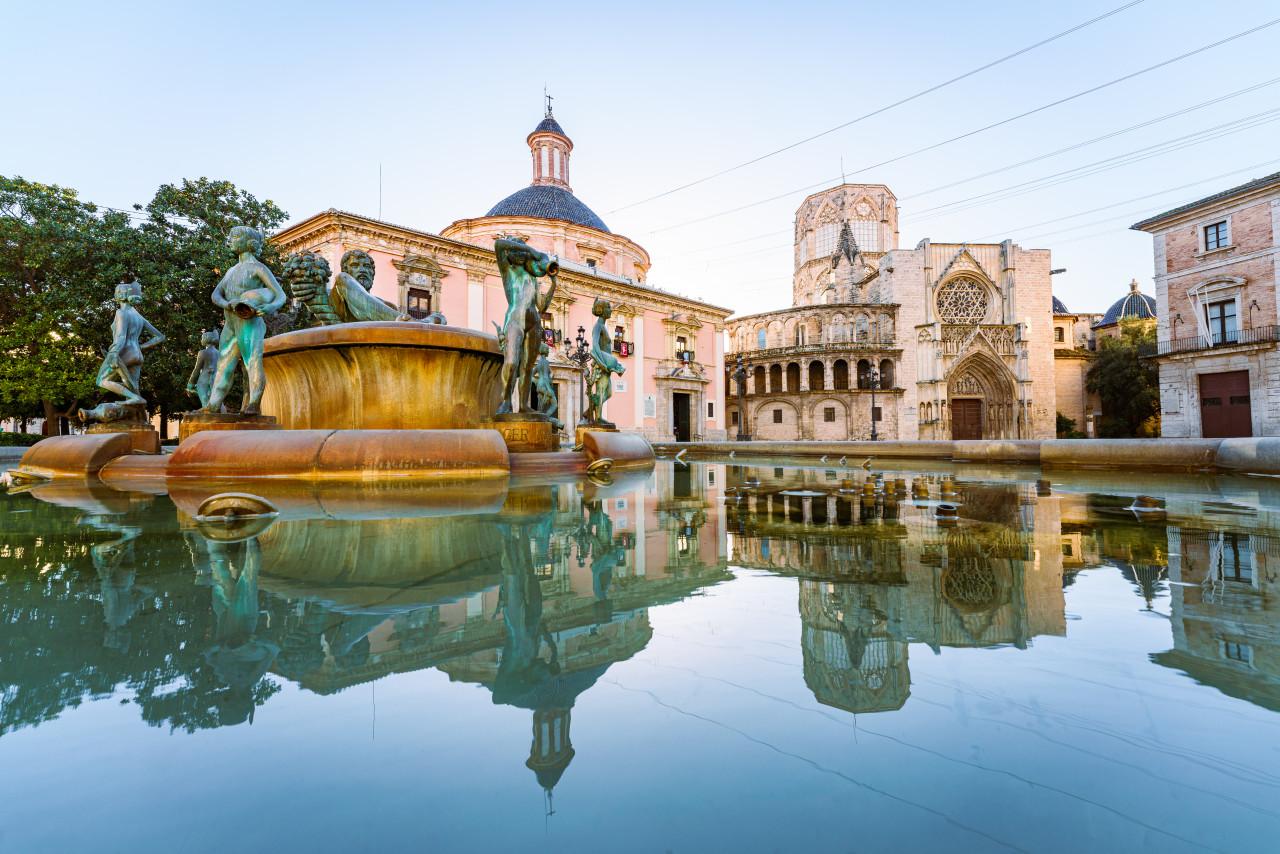 Almost all of the city's most important events are held in this central square in Valencia. At its centre stands the Fuente del Rio Túria, designed by Manuel Silvestre Montesinos, dominated by a mighty figure representing the River Turia and around it the eight damsels representing their respective irrigation canals (known as acequias). Behind it is the majestic Basilica of the Virgin with its pastel-coloured façade and imposing dome.
Called Plaça de la Seu by the Valencians, it is also adjacent to the Cathedral and over the centuries has become the place where the Tribunal de Las Aguas meets: in the Door of the Apostles an assembly is held, almost an actual ritual, rooted in the legislative structure imposed by James I, in which every Thursday of the year the tribunal discusses and settles the various disputes between farmers, which have arisen due to the use of irrigable water. Tourists stand around the elderly judges and listen to the sentences handed down in the Valencian language.
It is located in the historical centre, so it is easily accessible on foot from all points, the nearest metro stop being Alameda -
Festa de las Fallas: On 17 and 18 March, the fiesta de Las Fallas is held here, this is the Ofrenda de Flores to the Virgen de los Desemparados (Virgin of the Homeless). A large wooden frame depicting the Virgin is erected in the centre of the square.
3 - Lonja de la Seda
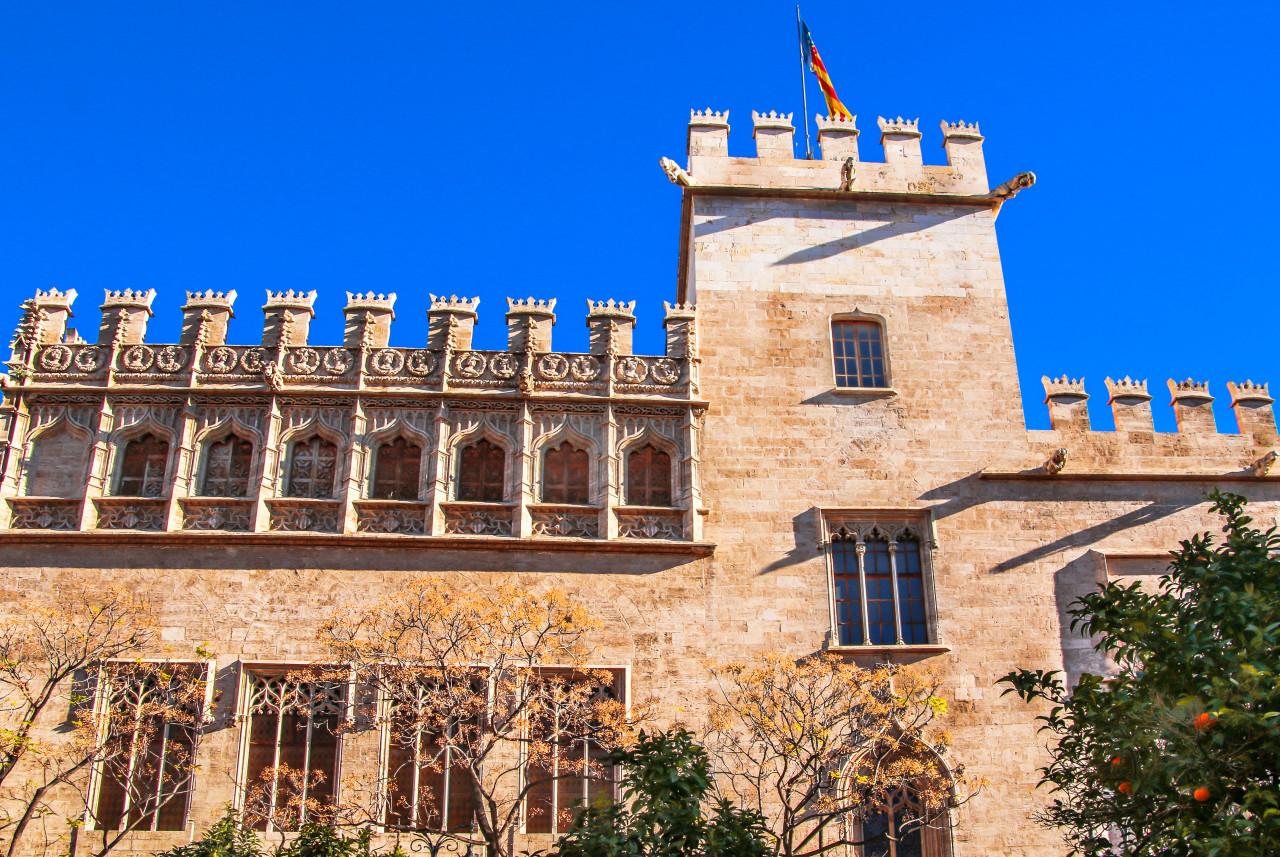 A small historical jewel is the Lonja de la Seda, testifying to the city's commercial prosperity and the wealth of its inhabitants in the past; Valencia's former'silk market' was only declared a UNESCO World Heritage Site in 1996 and tells of the tangible grandeur and beauty of the late Gothic architectural style of its interior and exterior structure.
The location now houses theCultural Academy of Valencia and remains a favourite for important exhibitions. Upon entering the complex, one is enraptured by the huge rooms, the colourful window decorations, the hidden masks depicting erotic scenes, the arched doorways and the roof details covering the Consulado del Mar.
Admission is included in the .
Student discounts: If you are a student, remember to bring your Student Card with you, as showing it at the ticket offices will entitle you to small discounts. In general, it is best to visit with a guided tour, and you can even buy precious silk at bargain prices!
Practical info: directions, times and prices
How to get there: at Carrer de la Llotja 2, in the historical centre. The nearest metro station is Alameda (lines 3, 5, 7 and 9), a 16-minute walk away -
Hours: Tue-Sat 10am-7pm, Sun and public holidays 10am-2pm, closed Mon
Ticket price: full price €2.00, reduced €1.00
4 - Mercado Central
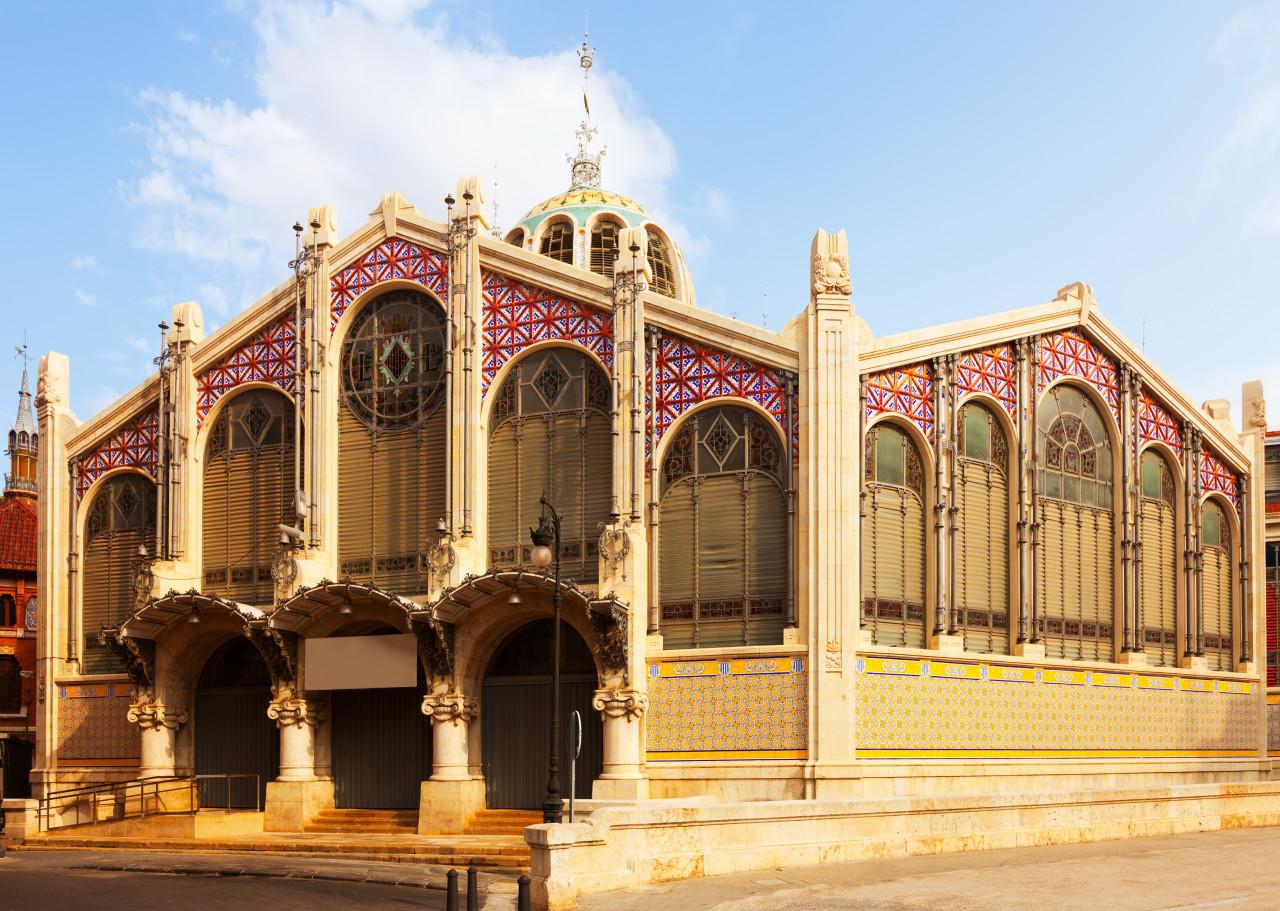
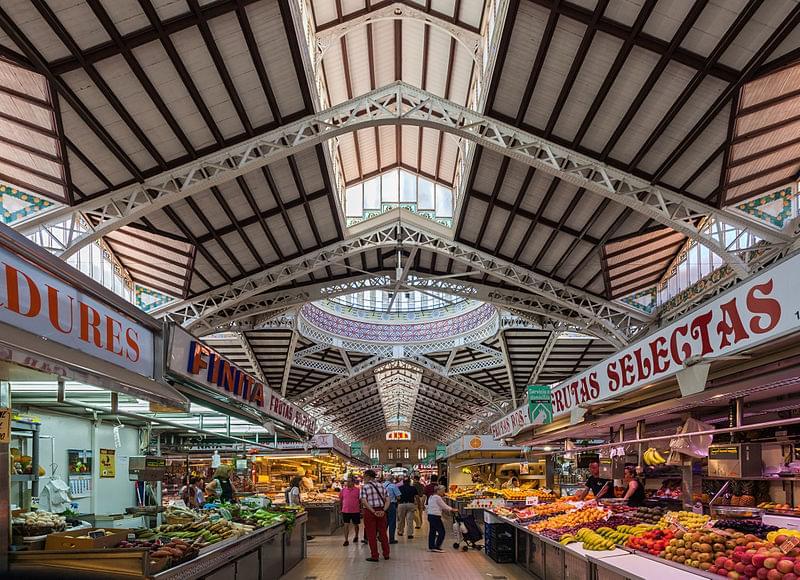 Four different entrances allow you to visit Valencia's gastronomic and colourful market, which is located directly opposite the Lonja de la Seda. Valencia's central market is truly vast and inside you can find any delicacy, from meat to fruit to the inevitable fish, all conveniently displayed on over 900 stalls.
This building is special because it has absorbed different and contrasting architectural styles, combining modern Art Nouveau with the Gothic and Baroque architectural influences of neighbouring buildings.
Discover the parrot: if we look at the market from the outside, we can see that above the main dome there is a green parrot, called 'Cotorra del Mercat' by the Valencians, which alludes to the various gossips that are the order of the day in the markets.
Practical info: directions, times and prices
How to get there: in Plaça de la Ciutat de Bruges. Get to the Sant Vicent Màrtir-Cotanda bus stop (lines 3 and 6), then walk for 8 minutes. The nearest Metro station is Alameda (lines 3, 5, 7 and 9), which is a 15-minute walk away -
Hours: Mon-Thu 8am-2.30pm, Fri 8am-8.30pm, Sat 8am-3pm
Ticket price: free
5 - Plaza de la Almoina
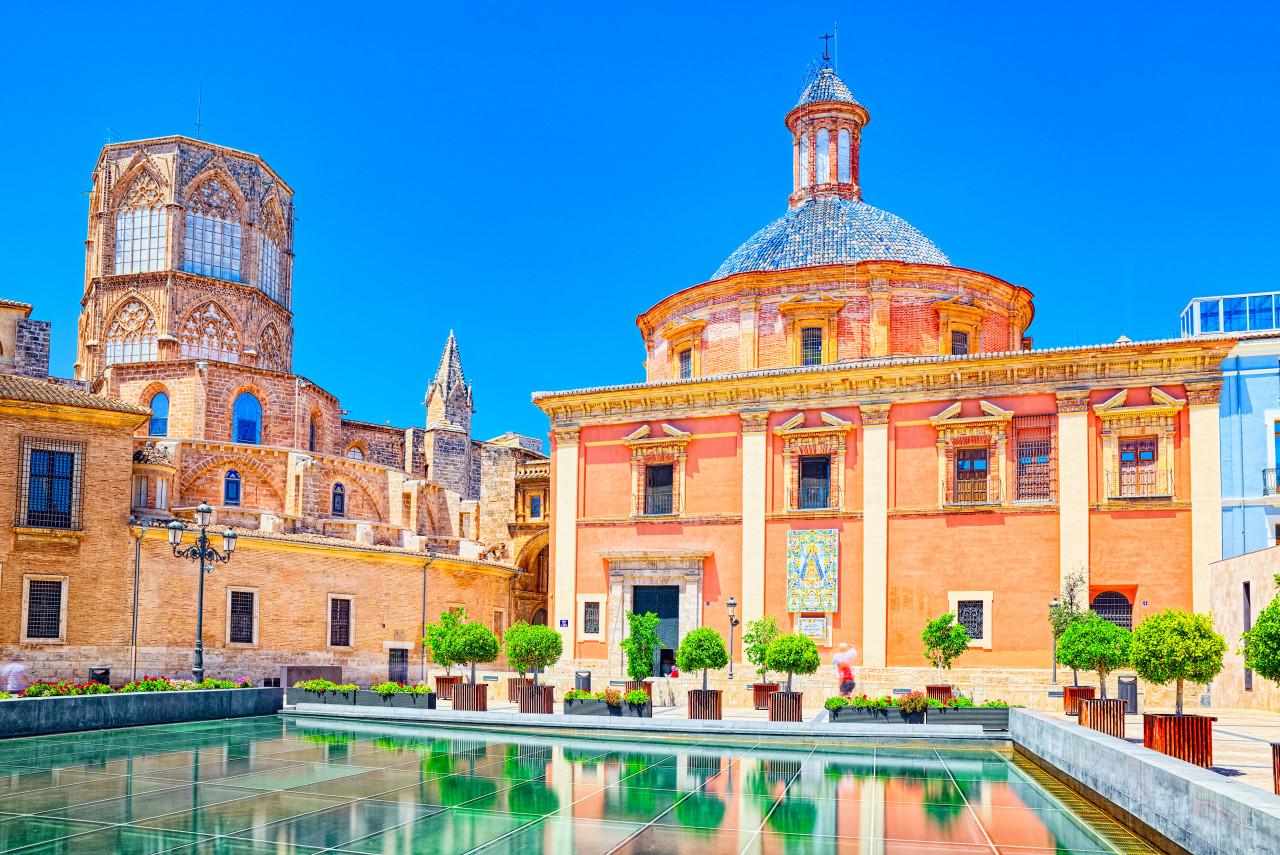 Thereal beating heart of Valencia's culture in the past is Plaza de la Almoina, a huge square nestled in the city's historic centre and home to one of the city's most significant architectural-religious masterpieces.
The square was named after a medieval institution that distributed food to the needy; in fact, in the Valencian language Almoina means'Almsina', a name given only after the demolition of the surrounding buildings; and it was thanks to the said demolition that archaeological remains were found and the ancient Roman city was discovered, the remains of which can be visited by entering the archaeological museum.
It is located in the historical centre, behind the Cathedral. Nearest metro station Alameda (lines 3, 5, 7 and 9). Get off at the station and walk about 12 minutes -
6 - Plaza de Toros
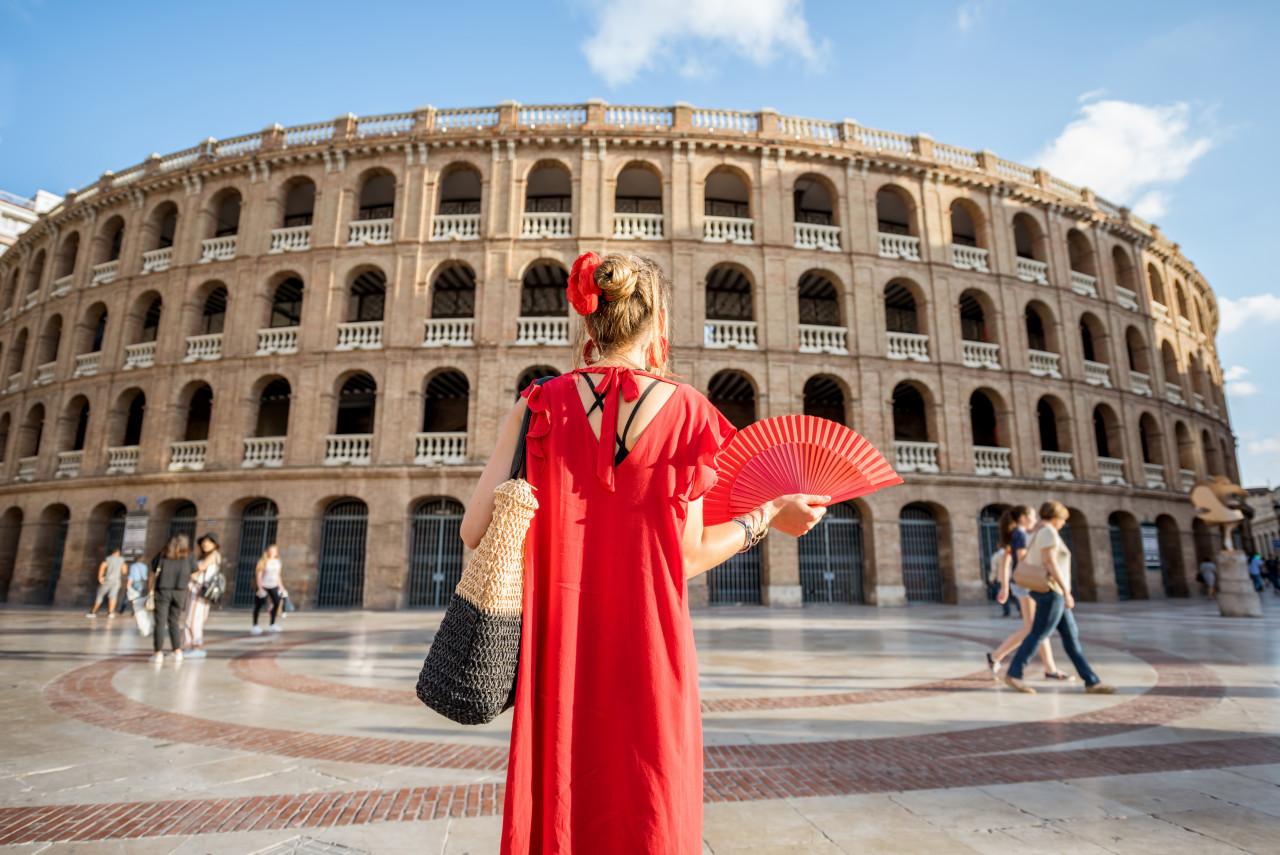 Valencia is also home to the most emblematic square of all the most famous Spanish cities: Plaza de Toros, located near the Ruzafa neighbourhood, was designed by Sebastián Monleón and then built over a ten-year period between 1850 and 1860, with the aim of providing a fixed place for Valencians to watch bullfights. In fact, its construction began at a time when the locals' passion for bullfighting was at its peak.
Today its capacity is around 10,500 spectators and its visitors are enraptured by the neoclassical style with four rows of arcades, very reminiscent of the Colosseum in Rome. There are also several pillars celebrating some illustrious bullfighters dear to the Valencians, for example Ladron de Guevara, Pepet, Curro Valencia, Manuel Granero and Vicente Barrera. There are daily tours of the Plaza de Toros and it is also possible to visit the Valencian Bullfighting Museum. It houses a collection on the evolution of Valencian bullfighting from the 19th century to the present day; in the exhibition you will find information on the formation of the bullfighter, the bullfighting liturgy, the bulls and the Plaza de Toros.
How to tell if a bullfight is taking place: simple, just see if flags are displayed at the top of the structure. In particular, if the flags are in all the pylons there will be a bullfight, if they are placed in alternate pylons there will be a bullfight of novillos, and if there is one every three pylons there will be a bullfight of becerros.
Practical information: directions, times and prices
How to get there: in Carrer de Xàtiva 28. By metro, the reference stop is Xativa, just 1 minute walk from the building. Near València Nord train station -
Hours: March to August Tue-Sat 10am-7pm, Sun-Mon 10am-2pm. September to February Tue-Sat 10:00-18:00, Sun-Mon 10:00-14:00. Holidays 10:00 a.m. - 2:00 p.m.
Ticket price: €2.00
7 - Albufera Natural Park
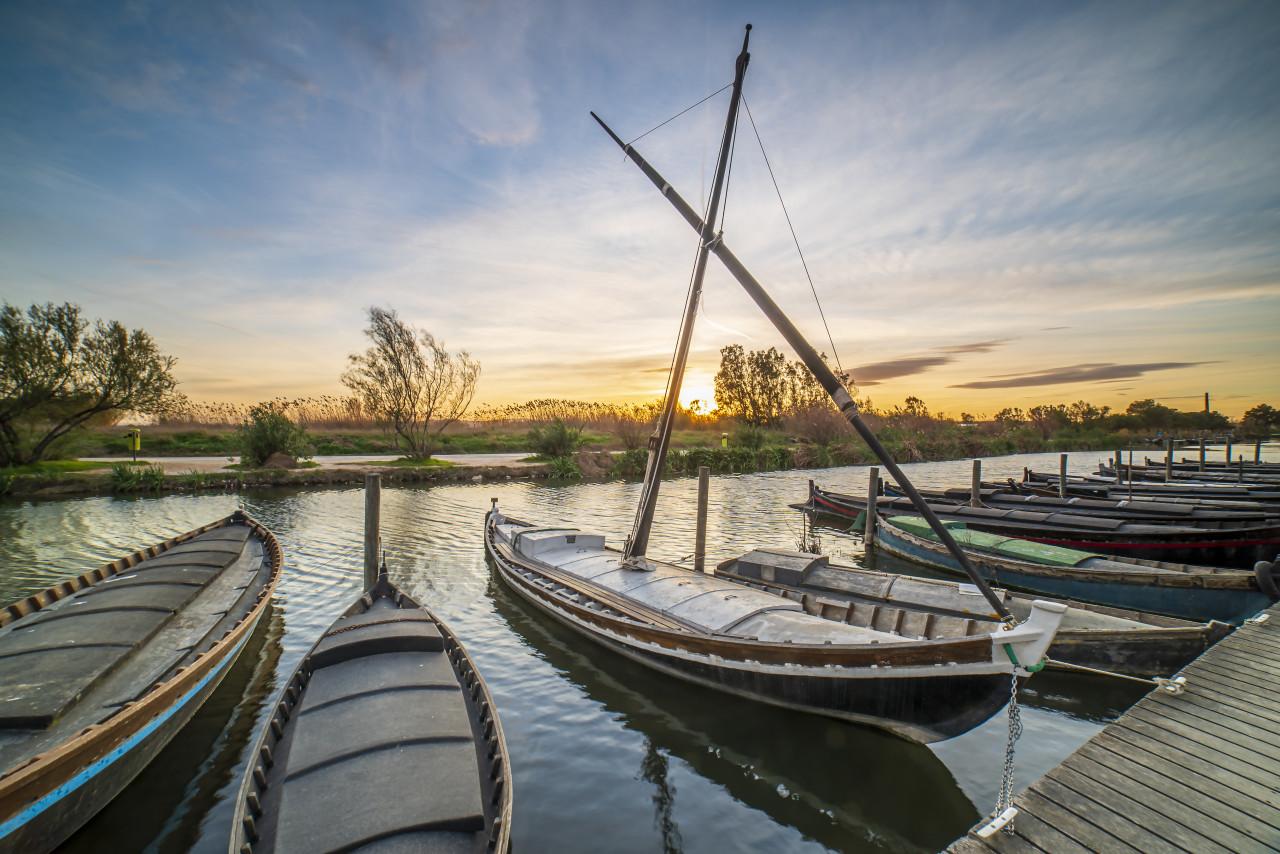 This is a true oasis, a natural park just half an hour's drive from the centre of Valencia. The park incorporates a beautiful lake and some fantastic seaside resorts, not to mention the fact that numerous animal species such as ducks abound here. Around 25,000 of them pass through these waters every year in winter!
Let yourself be lulled by the breeze and the sound of the waves of this'little sea' (a faithful translation of the name Albufera); treat yourself to a romantic boat trip and admire the extraordinary, unspoilt lush nature - you will never want to leave!
Takea jeep and boat tour: it is located about 10 km from Valencia, so you can easily reach it by car, but if you don't have a car, you can opt for a boat and jeep tour to the Albufera lagoon, with transport included. Whatever means you decide to use, we recommend you stay until sunset, one of the most magical moments.
Practical info: directions, times and prices
How to get there: From the City of Arts and Sciences bus no. 25 towards El Palmar; Alternatively, you can get there by taking the CV-500 for 15 min from the centre of Valencia in your own car or by taxi. also available -
Timetable: Albufera always accessible / boat tour duration 40 min
Ticket price: Albufera free of charge / boat tour €5.00 per person
8 - Oceanografic e Ciutat de les Arts i les Ciències
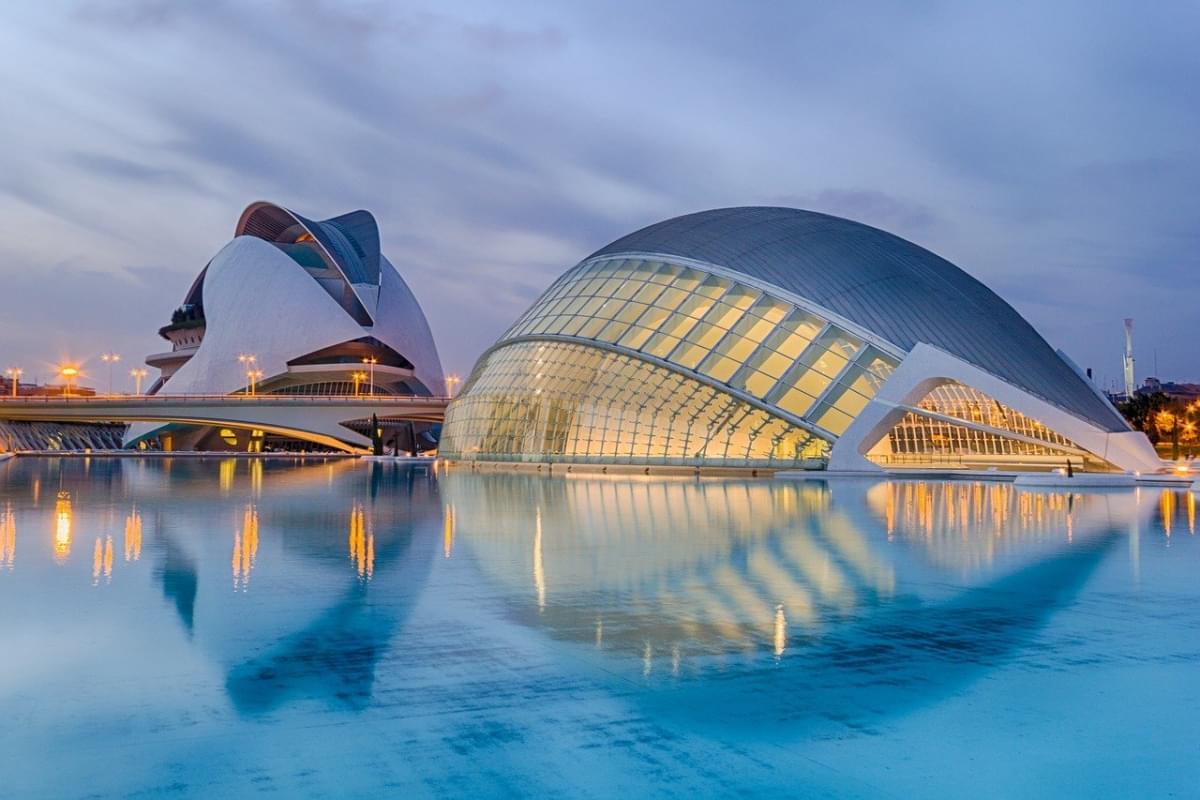
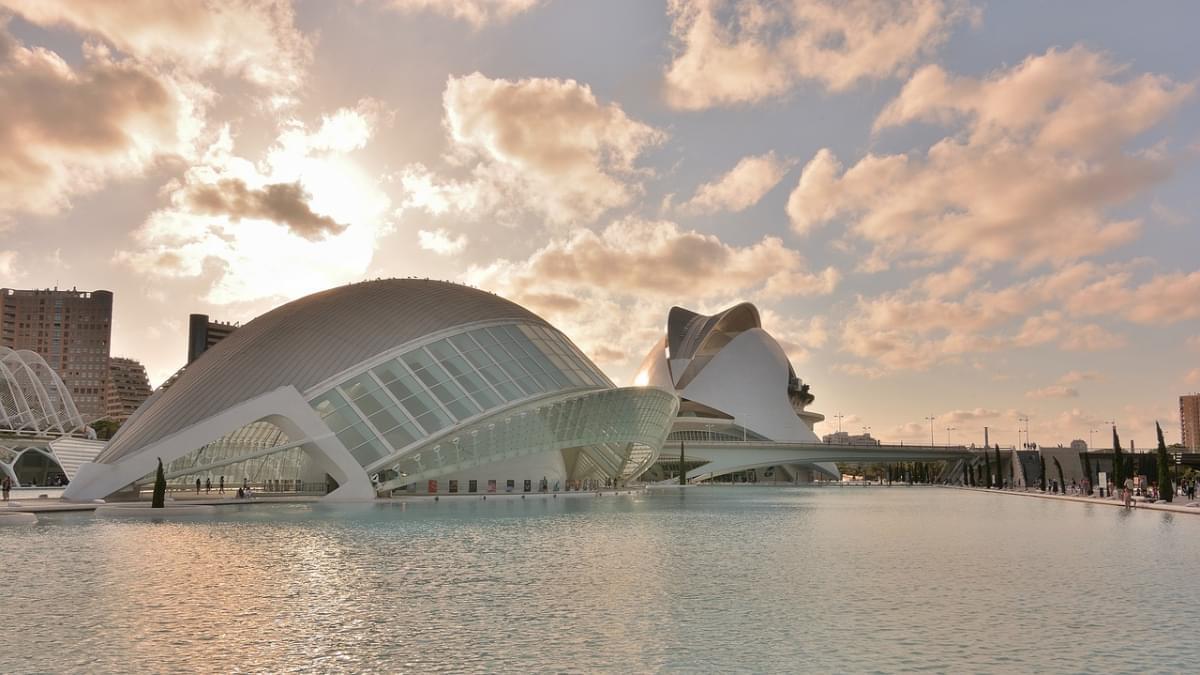
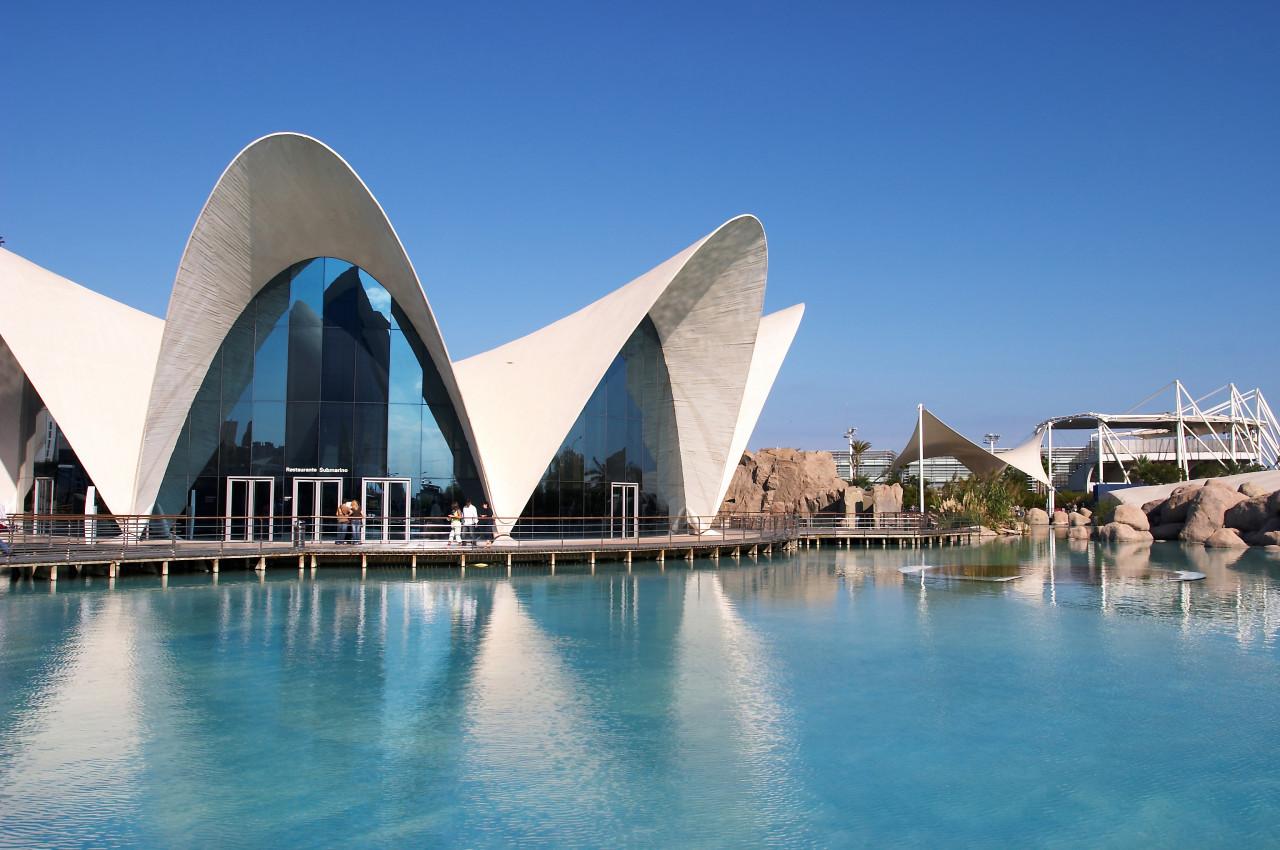 The most interesting way to find out what lies behind the laws of physics or dynamics, or to see some of the world's rarest animal species up close is to visit the Ciutat de les Arts i les Ciències: the entire facility is made up of five different sectors, each of which is divided into the three thematic areas of science, art and nature. A unique experience in one of the most beautiful cities in Spain.
It owes to the flair of architect Santiago Calatrava the creation of an immense attraction whose appearance is reminiscent of an imaginatively futuristic building. As distinctive on the outside as it is immense on the inside, you won't need more than a couple of hours to visit it. One of Valencia's top attractions, it includes theOceanografic, theUmbracle, the Palace of Arts, the Science Museum and theHemisfèric.
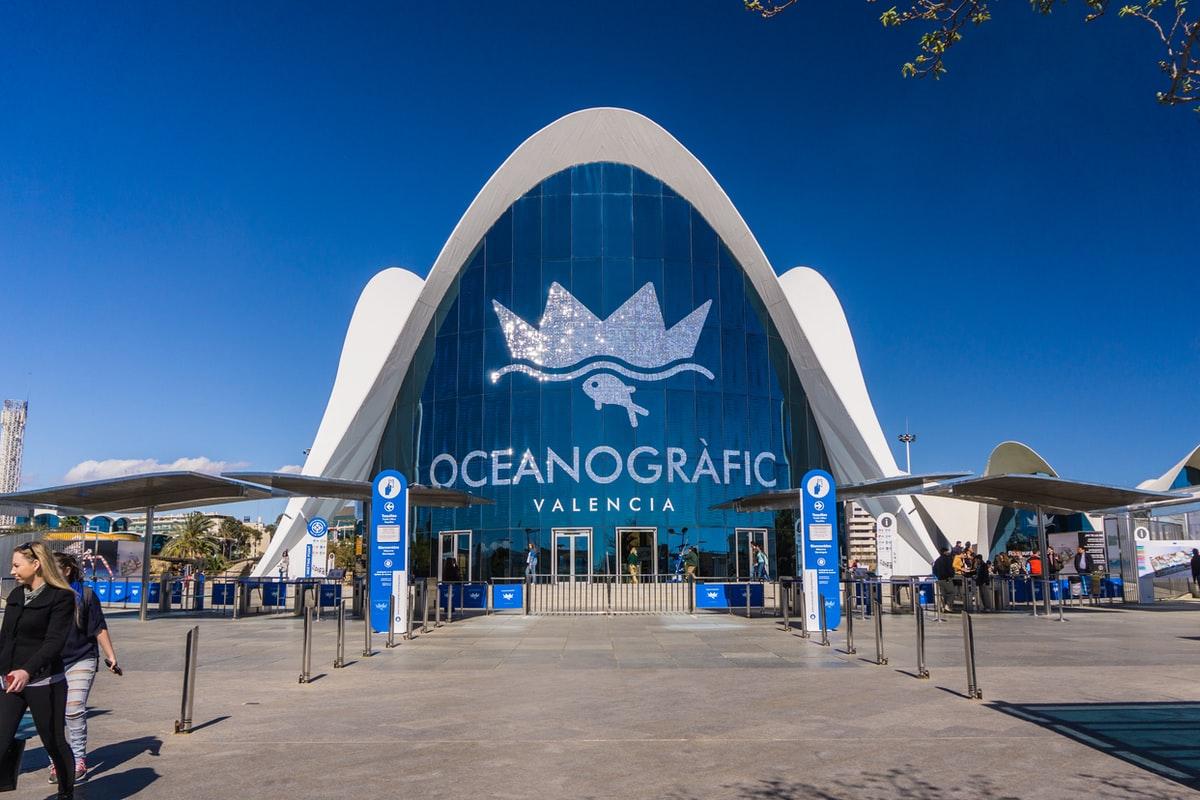 Come earlyand budget at least half a day: go here preferably early in the morning, there are numerous areas to see and a day may not be enough if you run into endless queues at the entrance. For this, a skip-the-line ticket and a map are indispensable to decide which route to follow. You can choose between the combined ticket or the Oceanogràfic-only ticket. Also, early morning and sunset are the best times to take wonderful photographs, as the reflections of the buildings on the water will be sharper, creating wonderful plays of light.
Practical info: directions, times and prices
How to get there: on Av. del Professor López Piñero. Nearest Metro Alameda (lines 3, 5, 7 and 9) and Marítim-Serrería (lines 5 and 7). Then continue on foot for about 20 min -
Hours: Mon-Thurs 10am-6pm, Fri-Sun 10am-7pm, in the summer period late closing at 9pm
Ticket price: combined price for all attractions full price €38.20, concessions €28.80
9 - La Malvarrosa Beach
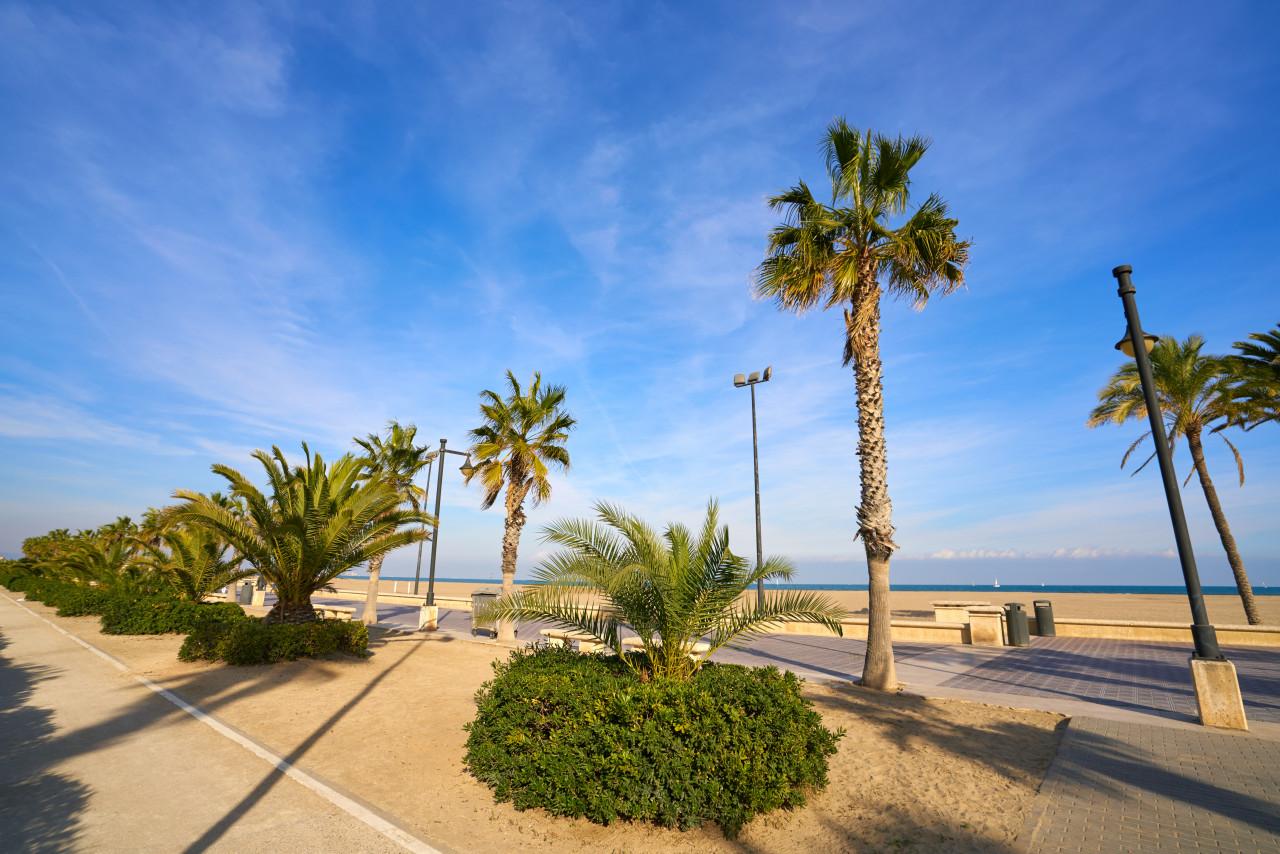 This is one of the best known beaches in Valencia, perhaps the most fashionable and popular. This huge beach welcomes Valencians from May to October and offers all kinds of amenities and entertainment. You can have fun playing beach volleyball, for example, or enjoy a delicious paella at one of the many small restaurants located along the golden beach that stretches for several kilometres.
Among theevents that take place on this wonderful beach are the famous'mascletà napolitana' during the fiesta de Las Fallas, and the impressive fireworks during the night of San Juan.
In the neighbourhood of La Malvarrosa. Bus lines are 2, 19, 31, 32 and N1 and N9; by metro, take line 4 and get off at 'Eugenia Vines' or 'Les Arenes' - .
Discover the origin of the name: the story of the name dates back to 1856, when El Cabanyal was nothing more than a marshy area, so the botanist Felix Robillard decided to totally transform it by planting mallard plants, which he then used to produce his essential oils.
10 - Mestalla Stadium
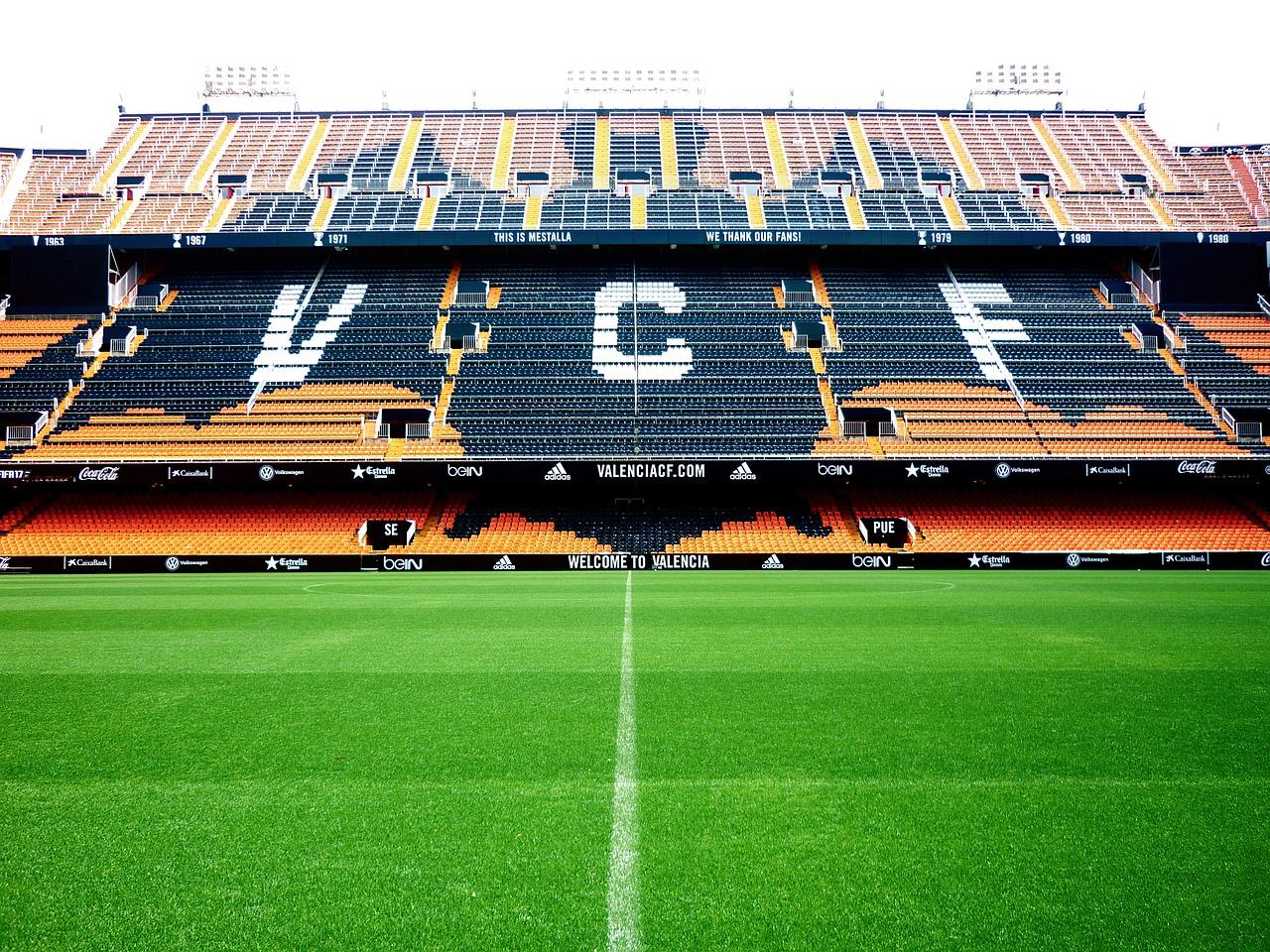 One of the best known stadiums in Europe and Spain's oldest stadium. Built in 1923 and now with a capacity of around 50,000 spectators, Valencians flock here every year for Valencia Club de Futbol's home matches. All football fans will surely know that, among the most important matches played in this stadium, the 1982 World Cup, which saw the Spanish national team take on Yugoslavia, Northern Ireland and Honduras, stands out.
Its name derives from the stream of the same name that still flows right under the stadium structure and throughout the surrounding neighbourhood.
The Mestalla is alive practically every day of the year and can be visited almost entirely thanks to the Mestalla Forever Tour Valencia CF: you will have the chance to experience it and get to know the home of Valencia Football Club, thanks to the local guides who will tell you about its history and most important anecdotes. You'll go from the press room to the players' dressing rooms, seeing all the awards and carefully preserved historical photos up close.
Practical info: directions, times and prices
How to get there: on Av. de Suècia. By metro, use the green line L5 to the Aragon stop, right next to the Mestalla stadium.
Hours: Mon and Sun closed for visits, Tue-Fri 12pm-6pm, Sat 11:30am-1pm
Ticket price: Mestalla Forever Tour Valencia CF full price €11.00, concessions €9.00 / to attend individual matches from €20.00.
11 - Museum of Fine Arts
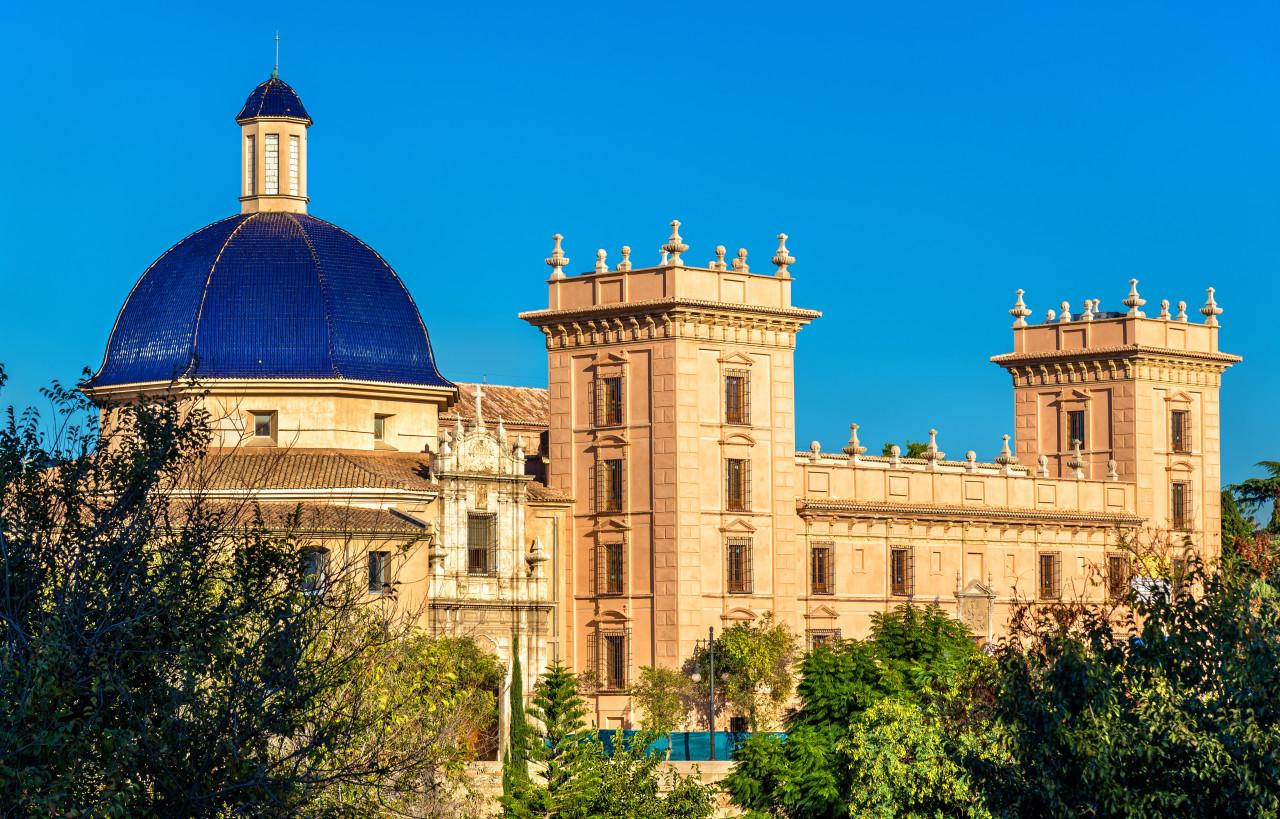 Francisco de Goya and Joaquín Sorolla are two of the famous painters featured in Spain's second-largest art gallery, where some 2,000 works from the late 15th century are grouped together. Among other works, those collected in the'Gothic' rooms stand out, with exponents of the Valencian school, including works by Pinazo and Benlliure. The museum is also known for its collection of Renaissance paintings, the Patio del Embajador Vich and an unpublished work by Velázquez.
The artistic itinerary truly embraces a long period of time and an infinity of works scattered within almost labyrinthine rooms: it starts with the Valencian primitives from the 14th century to the early 16th century with works by Jacomart and Reixach, and then moves on to Espinosa, Sorolla, Pinturicchio, Murillo, Velázquez, El Greco, Goya and many others. Its foundation dates back to 1683 by Archbishop Juan Tomás de Rocabertí, who entrusted the architect Juan Bautista Pérez Castiel, then master builder of the Cathedral.
Practical info: directions, times and prices
How to get there: in Carrer de Sant Pius V 9. By bus 6, 11, 16, 26, 28, 79, 94, 95. The nearest metro station is Alameda (lines 3, 5, 7 and 9) 10 minutes walking distance - -
Hours: Tue-Sun 10am-8pm, closed Mon
Ticket price: Free
12 - Valencian Institute of Modern Art
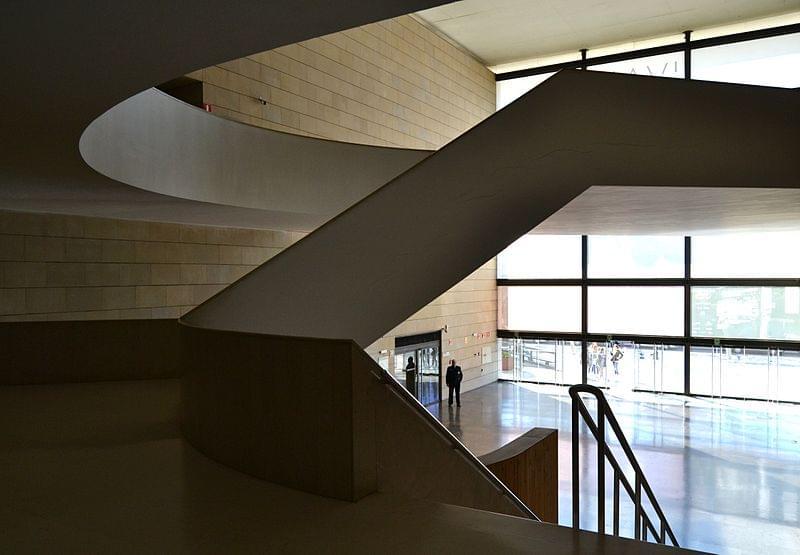 The Valencian Institute of Modern Art(IVAM) is one of the most important museums of modern art in all of Spain and often, several times a year, hosts important artists from all over the world who conduct interesting seminars! Inside, you will find some 11,322 works, including painting, photography, drawings and sculptures by not only Valencian but also Latin American, European and many other artists. Suffice it to say that it ranks 52nd among the most visited museums in the world.
They arearranged in two large areas, the Sala de la Muralla and the Centrè Julio Gonzales; the best known works and not to be missed if you visit the museum are those of Julio Gonzales () and Ignacio Pinazo (), the 20th century avant-gardists, from which the entire museum collection is based.
SEE ALSO: What to see at the Valencian Institute of Modern Art: opening hours, prices and advice
Practical info: directions, opening hours and prices
How to get there: C/ de Guillem de Castro 118. It's a 10-minute walk from the centre of Valencia, the nearest metro stop is Turia. -
Hours: Tue-Sun 10am-7pm, Fri until 9pm, Mon closed
Tickets: full price €6.00, reduced €3.00
13 - Barrio del Carmen
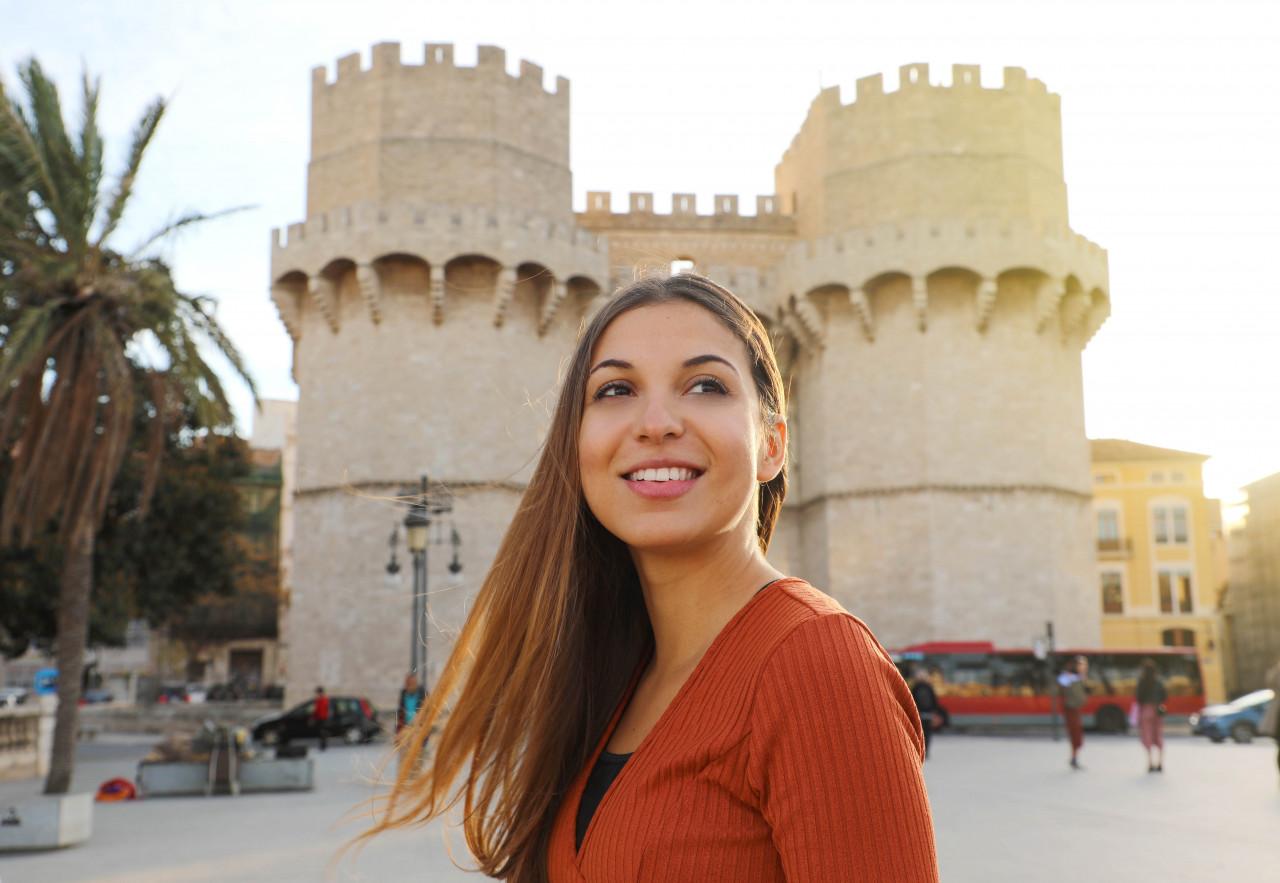
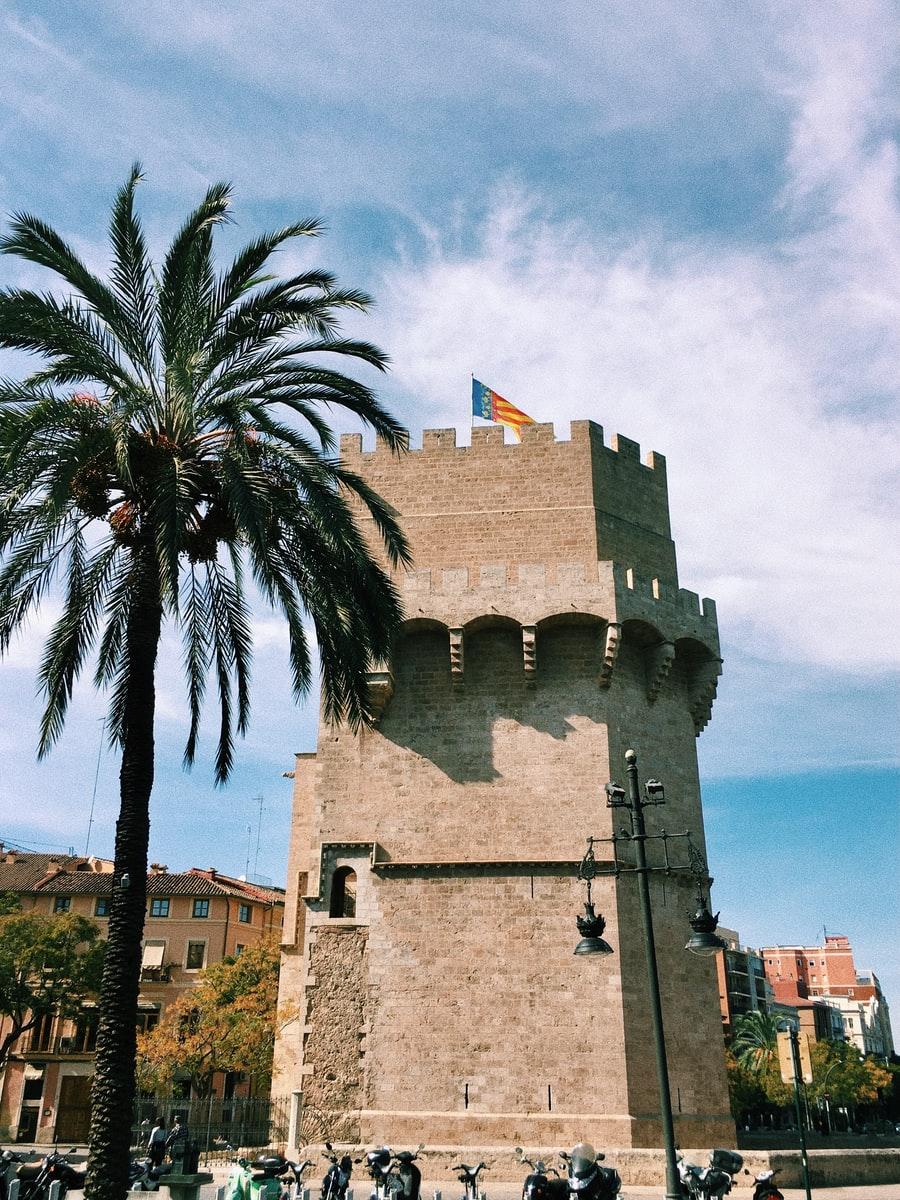
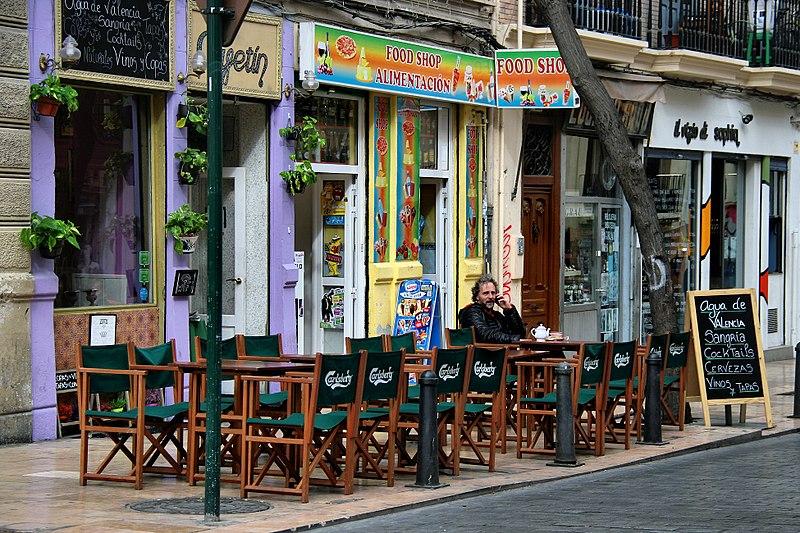 The hub of Valencia's social and nightlife is Barrio del Carmen, a neighbourhood famous for its shops, where one can give in to the evergreen temptation of 'holiday' shopping, and for its numerous clubs, which contribute to animating the area for whole nights. The gates that 'protected' it in ancient times are the Torres de Quart and the Torres de Serranos, which must be visited to peer down on the immense metropolitan city of Valencia from above.
Barrio del Carmen is a 100% active neighbourhood, a must-see destination in a stay that wants to combine the classic cultural visit with'naked' entertainment: here you will find bars and clubs of all kinds, the typical Valencian inns but also worldly pubs where you can drink alcohol until late at night!
Small neighbourhood in the historic centre. On its northern side it is surrounded by the Jardín del Turia. The nearest metro station is Alameda (lines 3, 5, 7 and 9), a 20-minute walk away - .
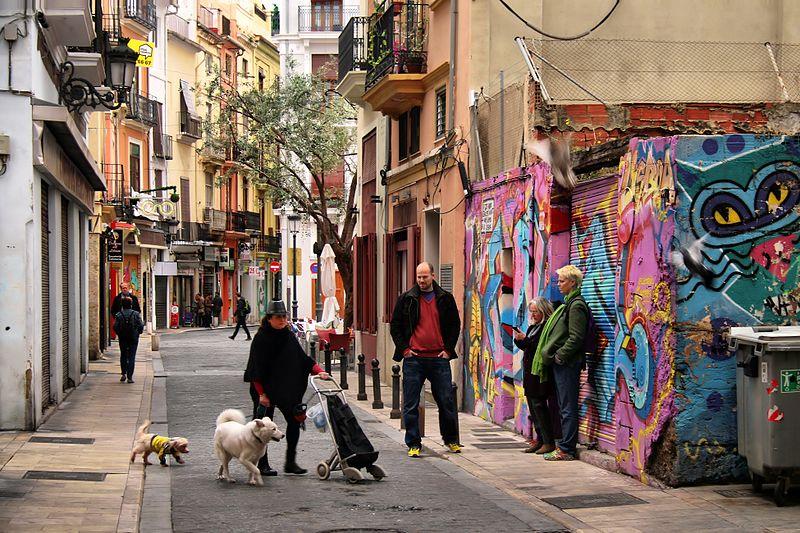 Discover the street art in the neighbourhood: don't miss the graffiti hidden in this neighbourhood, as for years artists have been competing to grab the best walls and try their hand at unique and colourful works of art depicting, for example, animals, scenes of urban life, etc. The advice is to be accompanied by a local guide, who will give you valuable tips and secrets for the best visit to the city.
14 - Turia Gardens
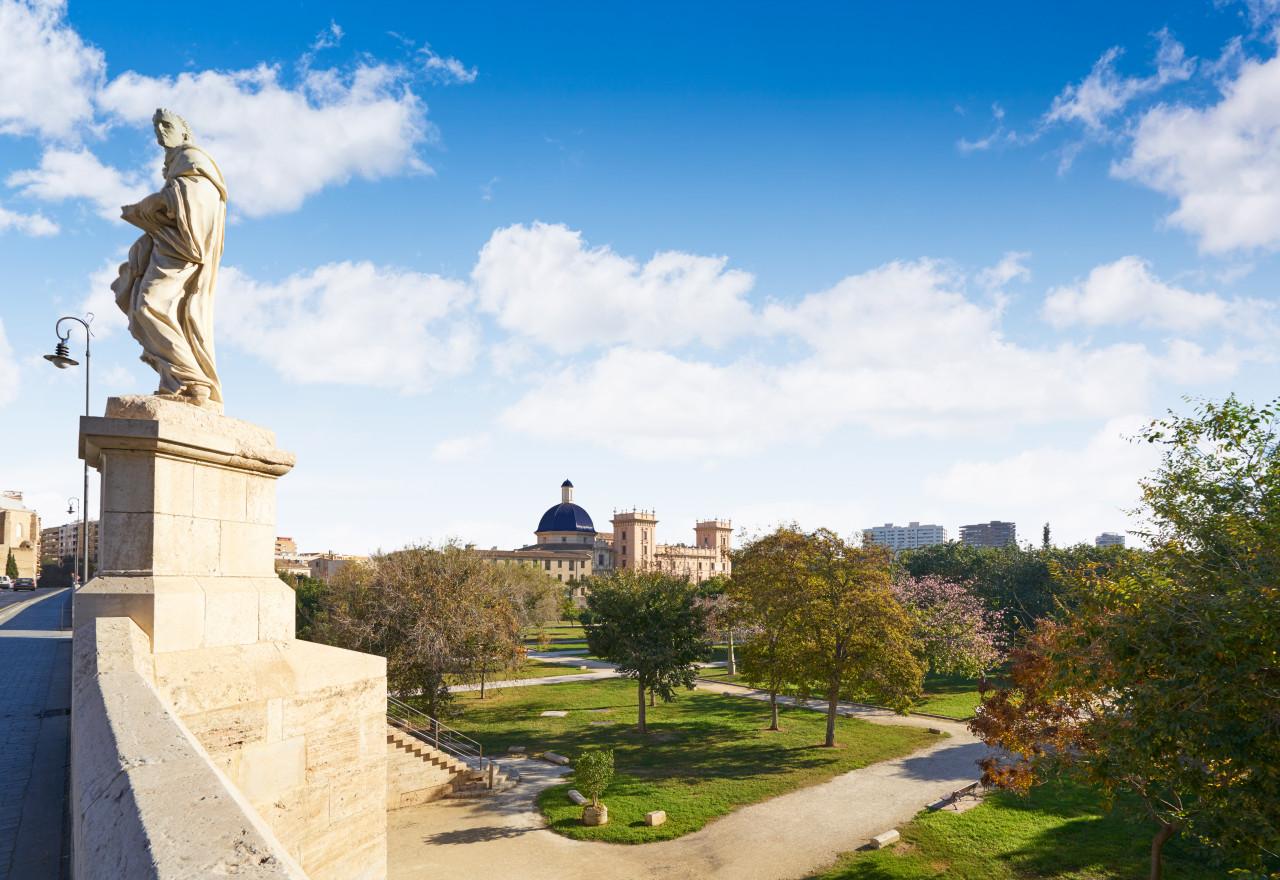
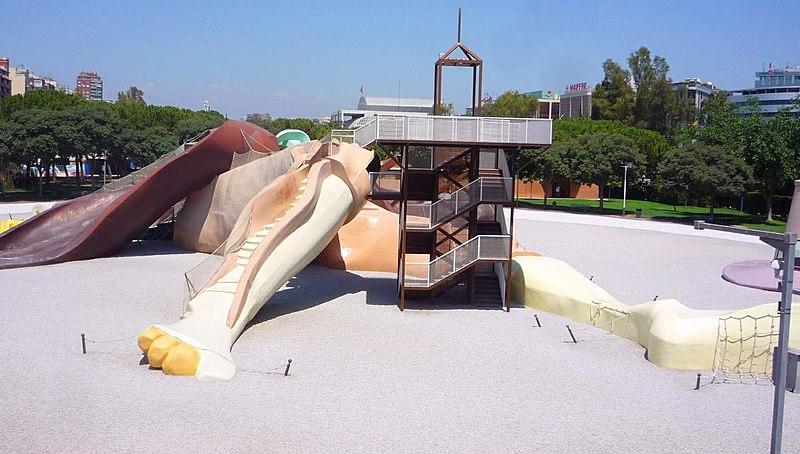 This oasis in the heart of Valencia, full of oleander, pine and palm trees, was created by an 'artificial' diversion of the Turi river, the waterway on whose banks the beautiful city stands. One of the park's most distinctive attractions is a picturesque Gulliver sculpture, a kind of'anthropomorphic slide' on which young and old alike climb, having fun.
Here, everyone can try their hand at many different sporting activities such as basketball and five-a-side football on the free courts at the end of the western slope, skatepark along the Skateplaza or the Gulliver skatepark, rent a bike or a tandem bike; in short, this park offers something like 110 hectares of space to relax and take a break from city traffic and the mundane.
Practical info: directions, times and prices
How to get there: Nearest Metro Alameda (lines 3, 5, 7 and 9). Get off at the station and walk about 12 minutes -
Timetable: Turia Gardens always accessible / Gulliver daily 10am-5pm
Ticket price: Turia Gardens free of charge / some activities subject to payment
15 - Bioparc Valencia
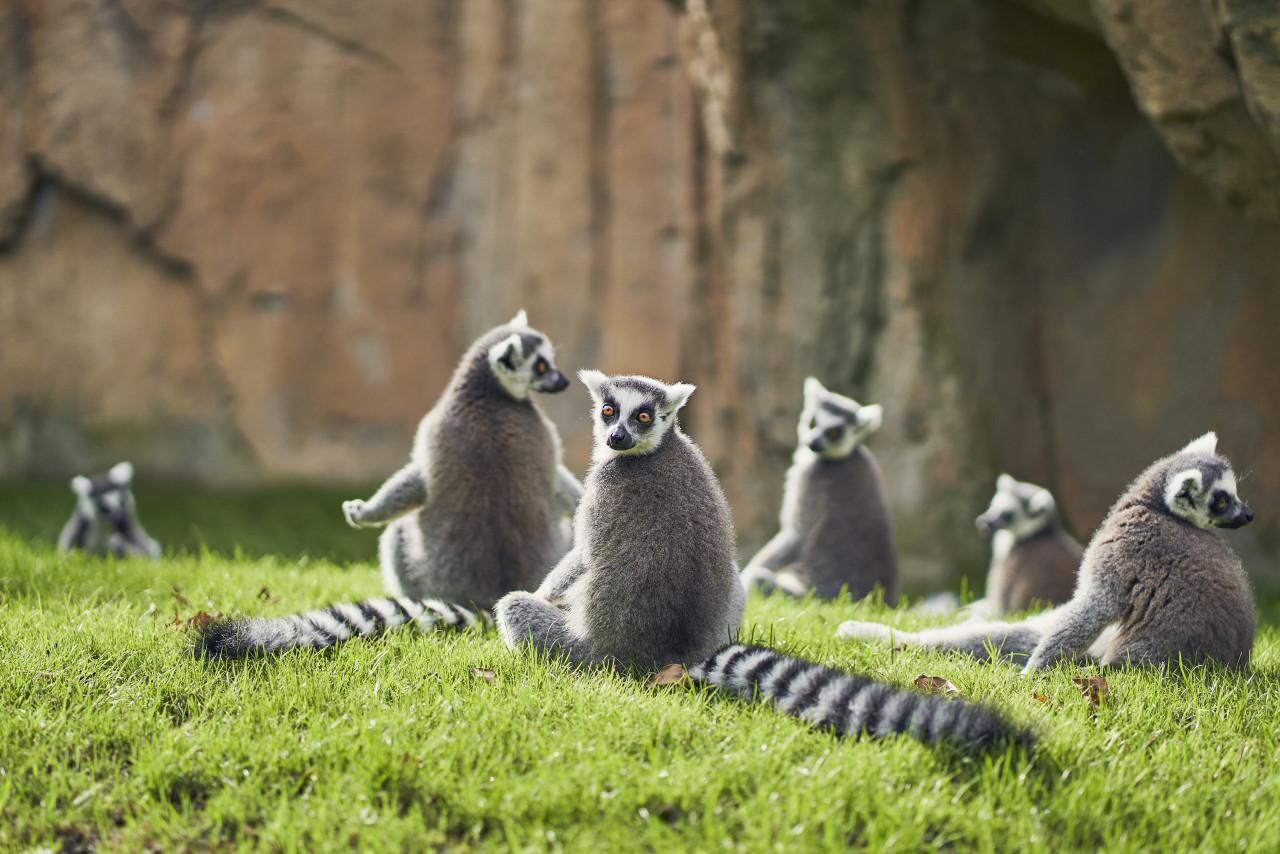 Don't call it a zoo, because Valencia's Bioparc is one of the few flagships in the protection and preservation of animal species. The area is home to numerous specimens, especially from Africa, such as lions, lemurs and giraffes.
The animals live in contact with each other, within habitats that 100% reproduce the natural conditions of their home area, and visitors can safely admire them in their daily activities. Of course, you will be guided by one of the guides who will explain how they grow, where they come from and the habits of each animal species you will see: you can watch the awakening of the sweet lemurs, the 'morning walk' of the giraffes, or see mighty lions play (behind protective glass, of course!).
This is one of the most beautiful parks on the Iberian Peninsula and boasts several firsts, for example it is the birthplace of the first aardvark in all of Spain. Ideal for spending a fun day with your children and discovering the animals together.
Practical info: directions, times and prices
How to get there: at Av. Pío Baroja 3. By bus via EMT lines 3, 29, 61, 67, 81 and 95. The nearest metro station is Tùria (line 1) 20 minutes walking distance -
Hours: generally daily 10am-7pm, but often vary according to day and season, please consult the
Ticket price: full price €23.80, concessions 4-12 years €18.00, concessions over €6517.50
Other attractions to visit
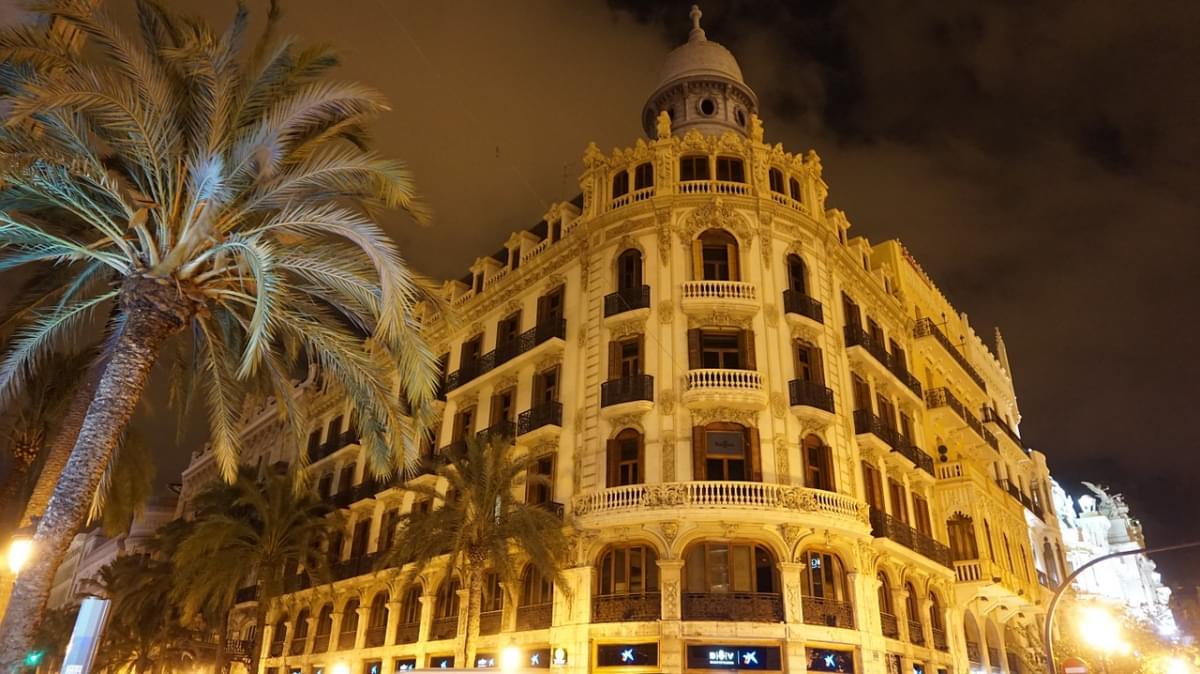 Valencia has so much to offer, many describe it as a city steeped in history but turned towards modernity and the future, and its varied attractions are certainly an example of this!
The best thing to do, especially if you are short on time, is a , to learn about the history and main monuments with a local guide.
In addition to the must-sees already listed, the National Ceramics Museum (€1.50) is definitely worth a visit. It houses pieces from the collection of medieval Valencian ceramics, 18th-century wagons, Dresden furniture and much more; the Plaza Redonda, almost hidden in the centre, is definitely worth a stop; here you will find many hobbyists producing exclusively Valencian products. Also worth a visit is the Fallas Museum (€2.00), perfect for learning about the Fallas festivities at any time of the year; and definitely take a stroll through the Ruzafa neighbourhood, the barrio with the highest influx of people and where you can breathe in an atmosphere of continuous partying and enjoy the jazz concerts and photo exhibitions, perhaps sipping a good sangria until late in the evening.
10 things to do in Valencia
Climb the Torres de Quart
Photos in front of the Oceanogràfic
Beach day at the Malvarrosa
Breakfast at the historic Horchateria Santa Catalina
Photos between the porticos of the College of the Patriarch
Admiring the San Nicholas frescoes
Flamenco show in a Valencian tablao
1/10
Climb upthe Torres de Quart: this is the largest city gate in the whole of Valencia and you absolutely must climb it to enjoy the wonderful view from the city's highest terrace (€2.00, free with )
Photo in front of the Oceanogràfic: this is a huge and extremely peculiar structure that seems to resemble an immense turtle coming out of the water, which then reflects symmetrically on the water. One of the best moments is at sunset
Paella lesson: You can't say you've been to Valencia without eating the real and only Valencian paella. What if you try your hand at a cooking test instead? Find out how to cook real paella,
Valencia by bike: Valencia is a truly green and human-friendly city. Many of its inhabitants now get around by bicycle, so we recommend a bike tour accompanied by a local guide.
Shopping in Ruzafa: this neighbourhood is considered the 'Soho' of Valencia and is undoubtedly a shopper's paradise. Shops, restaurants, clubs, there really is nothing missing here for an afternoon of fun and relaxation
Beach day at the Malvarrosa: enjoy the city's most famous beach, and maybe take a paddle stand-up lesson to paddle through the waters of the Malvarrosa (€30.00)
Breakfastat the historic Horchateria Santa Catalina: a delicious breakfast to start your day with hot chocolate and churros, an authentic local tradition (€6.00)
Photograph under the arcades ofthe College of the Patriarch: one of the most important architectural testimonies of the Spanish Renaissance, a photo under the wonderful arcades is not to be missed
Admiring the frescoes of San Nicolas: Due to the beauty of the frescoes on its ceiling, the Church of San Nicolas, in the historic centre, has earned the nickname 'the Valencian Sistine Chapel'. Impossible, therefore, to miss its beauty
Flamenco show in a Valencian tablao: Witness the best show in Valencia, with the best performers, accompanied by an authentic Mediterranean dinner.
Plan your stay in Valencia: flights and hotels
 Valencia is well connected with Italy, also with Ryanair and other low cost airlines). The flight time is about 2 hours from Rome.
The city is large and there are many attractions to visit. For a first approach to the city, we recommend taking a , to familiarise yourself with the city and identify landmarks. This advice is all the more valid if you have little time available.
Theperfect time to visit Valencia is between May and September, the temperature will be mild and very pleasant. August should be avoided as the temperatures will be extremely high and almost unbearable. April and October are also fine, but it is actually beautiful all the time.
Thebest neighbourhoods in which to stay are those in the historic centre such as Ciutat Vella or Barrio del Carmen,), however, the more peripheral neighbourhoods (e.g. Campanar) should also be considered, as they are certainly cheaper and equally well connected by public transport; you can easily move around by metro and bus between attractions that are far apart. The historical centre is also the heart of the movida, unmissable districts such as Barrio del Carmen!
If you are travelling with children, they will certainly love the City of Arts and Sciences, with all the attractions there! Also not to be missed are the Jardín del Turia, with the large Parc Gulliver. In this case, you might also consider staying in one of the neighbourhoods near the beaches, to indulge in a few afternoons of beach fun.
Finally, if you are travelling low-cost, Valencia is an affordable destination, with great prices both for attractions and for meals and dinners. Of course, in months like July and August, costs tend to rise. To save even more, we recommend the Valencia Tourist Card.