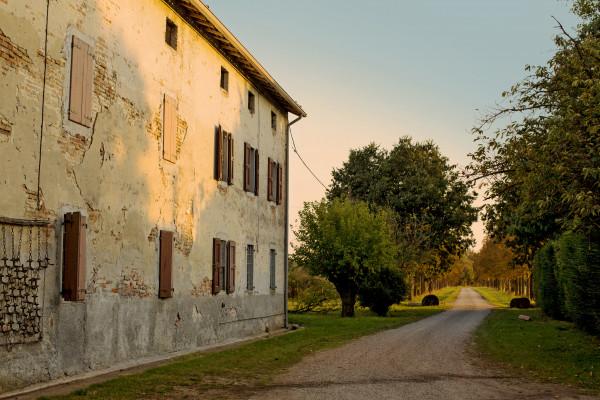
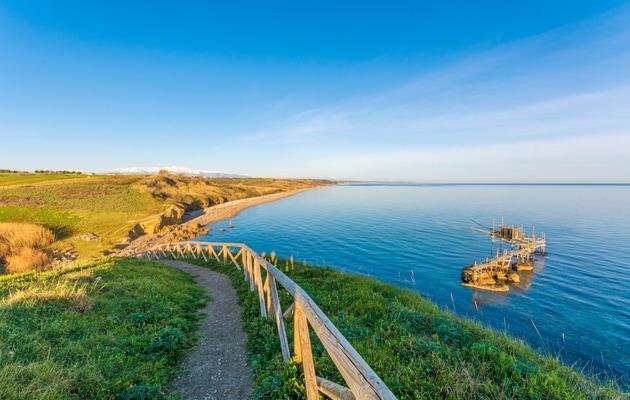
A weekend in and around Ferrara will take you on a discovery of a town of unique charm, declared a UNESCO World Heritage Site, a small jewel that shines in a flat territory only apparently regular and monotonous, but in fact shaped by man throughout history in dialogue with nature and dominated by abbeys, fortresses and imposing castles.
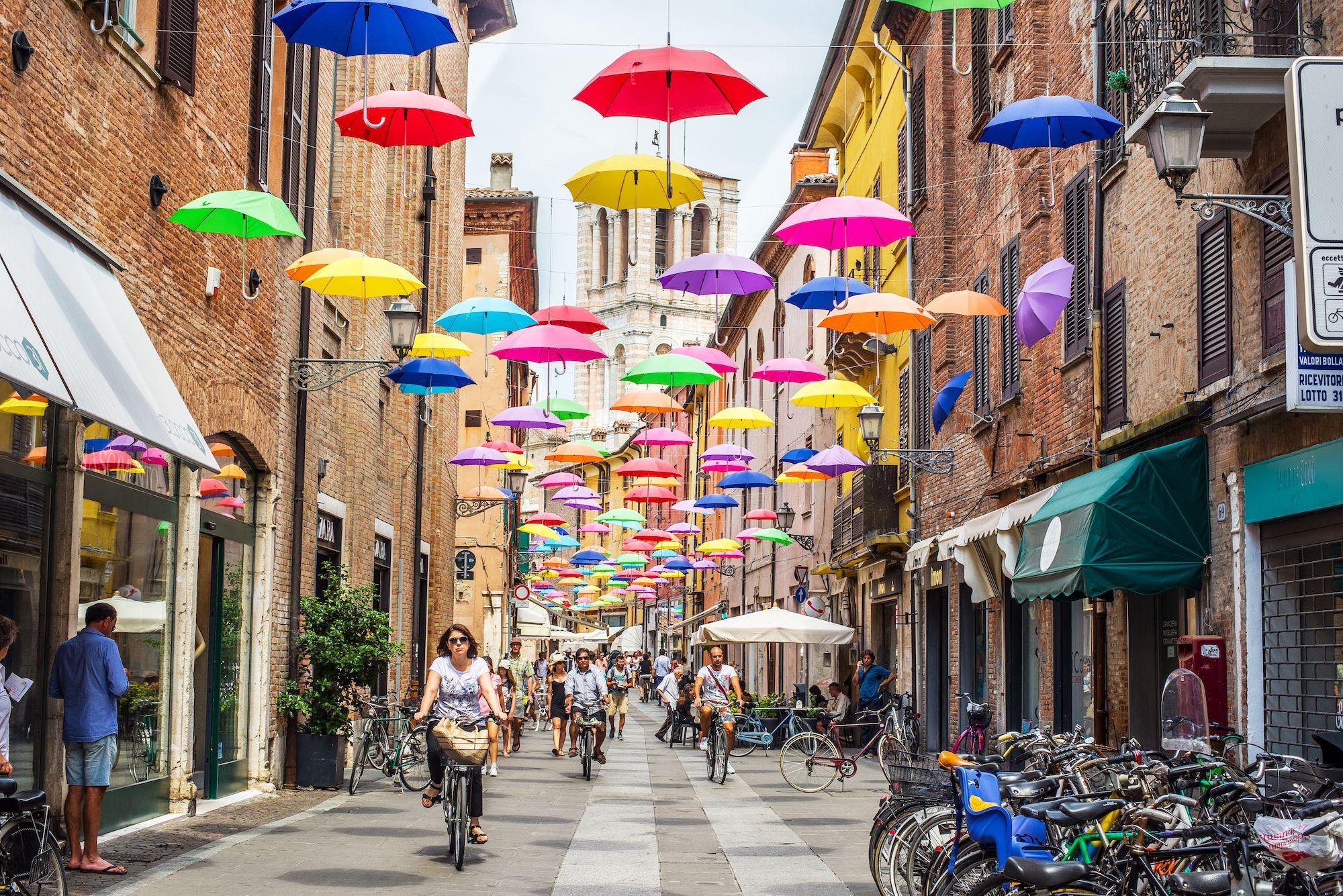
Cycling in the historic centre of Ferrara, with the Cathedral in the background. Alvaro German Vilela / Shutterstock
Day One: Ferrara and its treasures
Small, but with so much to offer: an almost intact mediaeval town, sumptuous Renaissance palaces, a great castle, a magnificent cathedral... and then the amazing cuisine (let's not forget, we are in Emilia Romagna!), the interesting museums, the wealth of events, the lively atmosphere combined with quiet and elegance. And, above all, the possibility of getting to know all this by pedalling on two wheels, following your own rhythm, in harmony with that of the places.
The unmissable
After renting a bicycle, head for the Castello Estense, built in 1385, imposing and surprising. Despite its four towers, massive central body and moat, it is integrated into the urban fabric, as it originally stood on the edge of the medieval city, before it was expanded.
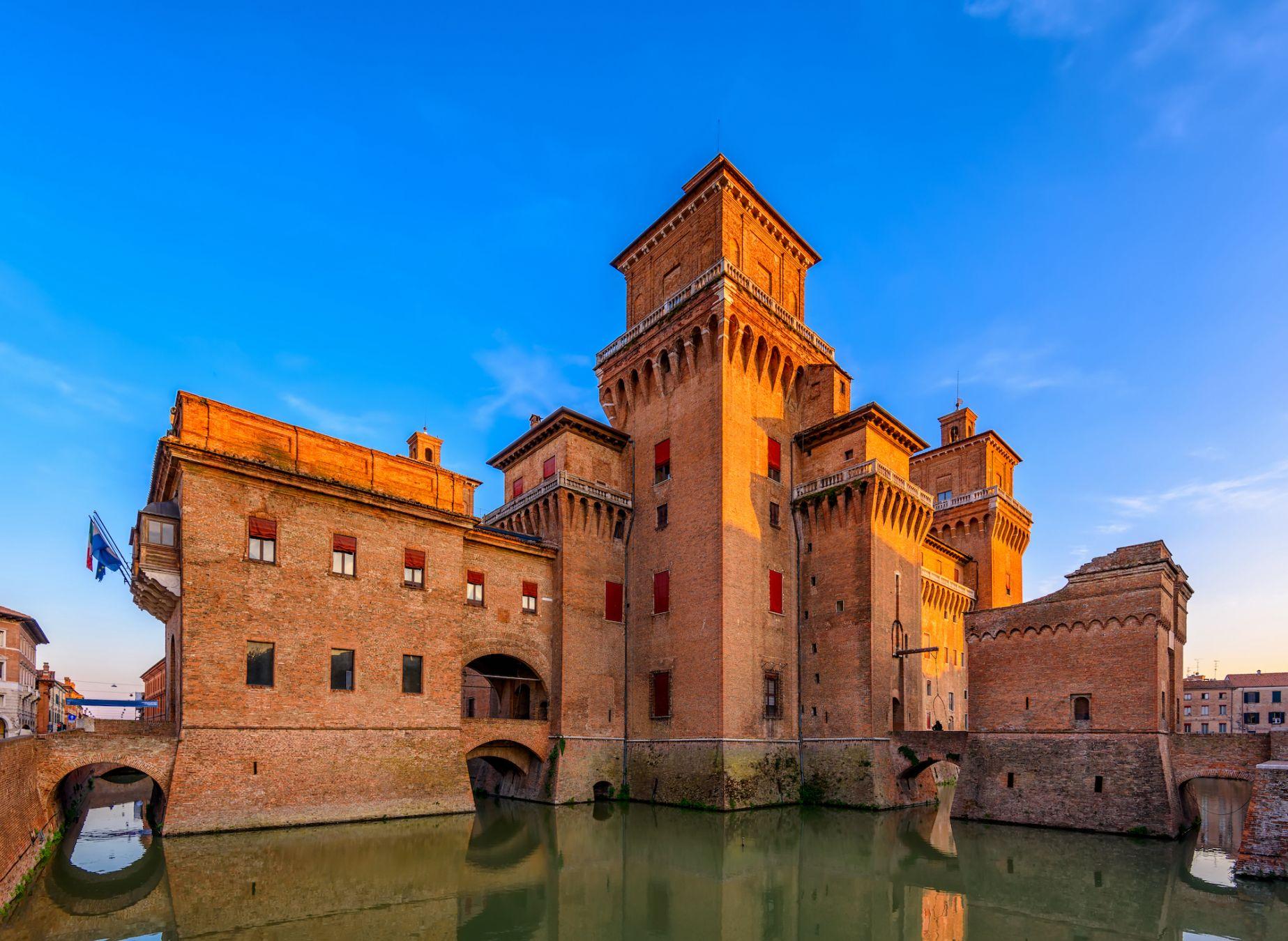
The imposing Castello Estense, one of Ferrara's must-see sights. Catarina Belova / Shutterstock
Back in the saddle again to reach one of the masterpieces of Italian Renaissance architecture, the Palazzo dei Diamanti, a splendid residence designed in 1493 by Biagio Rossetti on Corso Ercole d'Este to house Duke Ercole's brother, Sigismondo. An unmistakable feature of the palace, and one of the symbols of the House of Este, are the diamond-cut stones on the white ashlar façade. Inside, visit the Galleria di Arte Moderna e Contemporanea (Gallery of Modern and Contemporary Art), with consistently high-level exhibitions, and above all the Pinacoteca Nazionale (National Picture Gallery), which houses a very important collection of Italian and other paintings (from the 14th century onwards). The residence is the undisputed star of theAddizione Erculea, the district commissioned by Hercules I in 1492, the design of which was entrusted to the architect Rossetti. The signature is also the same for the magnificent Palazzo Costabili, begun in 1495, which since 1935 has housed the National Archaeological Museum, unmissable for its rich collection of artefacts mostly from the city and the Etruscan necropolis of Spina, which stood in the Po Delta, near present-day Comacchio.
History and culture, art and cycling: the belly, however, also wants its share. Refresh yourself, therefore, in the historic wine shop Hostaria del Chiucchiolino 'Al Brindisi', which is said to be the oldest wine shop in Italy, dating back as far as the 15th century.
From Via delle Volte to the Monastery of Sant'Antonio in Polesine
Recharged with new energy, dedicate your remaining time to discovering other wonders of Ferrara. The mediaeval fondachi, the river cobblestones, the covered passageways, the evocative backdrop of light and shadow of the long Via delle Volte, the backbone of the 8th and 9th century linear city, will take you on a journey through time; with a walk or bicycle ride through the Jewish Ghetto, you will capture the atmosphere and share the memories of this mediaeval quarter, which was home to the Jewish community, one of the oldest in Italy, from 1627 to the Unification of Italy. Then stop at Piazza Trento e Trieste, better known by its original name of Piazza delle Erbe, along the southern flank of the Cathedral, which for centuries was the site of the city market, and at Piazza del Municipio, accessed through the Volto del Cavallo, the opening in the façade of the Palazzo Municipale, once the Ducal Palace.
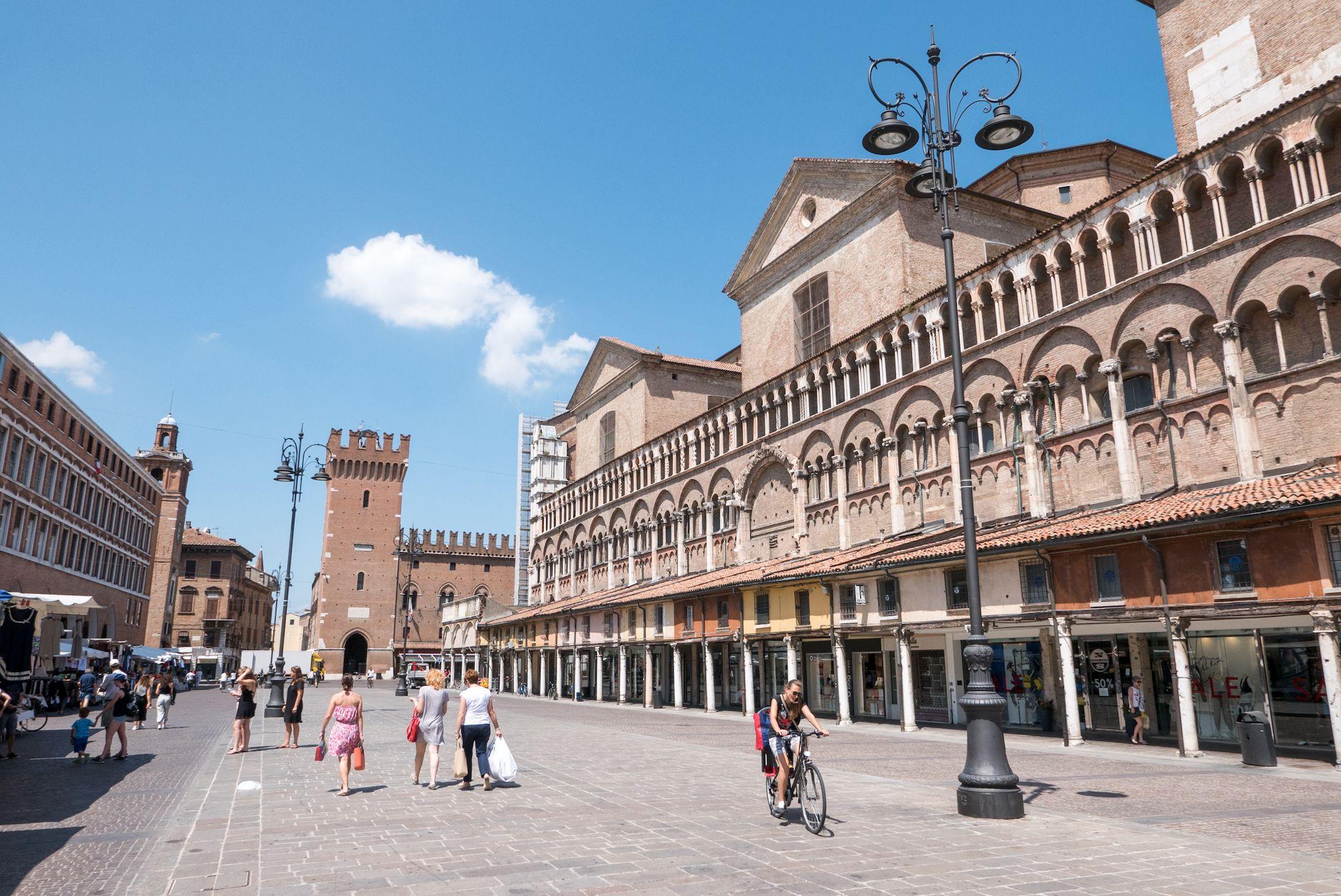
Piazza Trento e Trieste, also known as Piazza delle Erbe, for centuries the site of the city market. Pieter Roovers / Shutterstock
Read also:
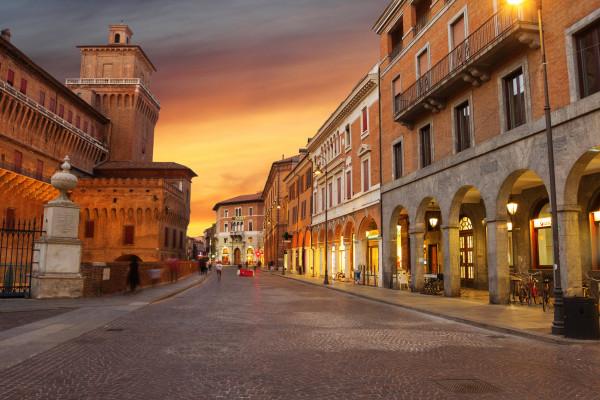
A little further away from the central core, Palazzo Schifanoia, an explicit declaration of war on boredom by the Este family, is worth a visit, as is the Certosa di Ferrara, the monastery built from 1452 to 1461 at the behest of Borso d'Este, which since 1811 has housed the city's largest cemetery, established by Napoleon. The Monastery of Sant'Antonio in Polesine, founded by Blessed Beatrice II d'Este and still an enclosed Benedictine women's monastery, on the other hand, can only be visited during limited hours: ring the bell and enter to admire the marvellous frescoes hidden behind the grates, after having visited the church, a small Baroque jewel, on your own.
You deserve dinner in one of the town's excellent restaurants, for example La Romantica, which offers great local classics (homemade tagliatelle, salama da sugo and stuffed pasta), a tasty fish menu and a rich selection of wines.
Sign up for our newsletter! For you every week travel tips, special offers, stories from the world and 30% discount on your first order.
Day two: the surroundings of Ferrara
Pomposa Abbey
Time is short: certain that you will return to Ferrara to deepen your knowledge and see what you are still missing, set off forPomposa Abbey, a hamlet of the municipality of Codigoro, which already appears from afar with its bell tower, soaring in the flat plain. It still stands as isolated as when it was surrounded by water and bears witness to the existence of a community of monks of the Order of St. Columbanus in the Insula Pomposiana (a strip of land in the middle of the waters of the Po and the Adriatic), who lived here from the 6th-7th centuries. After enjoying the picturesque landscape in which the abbey is immersed, visit the complex, with the aforementioned bell tower, the monastery, the Pomposian Museum and the 14th-century Palazzo della Ragione.
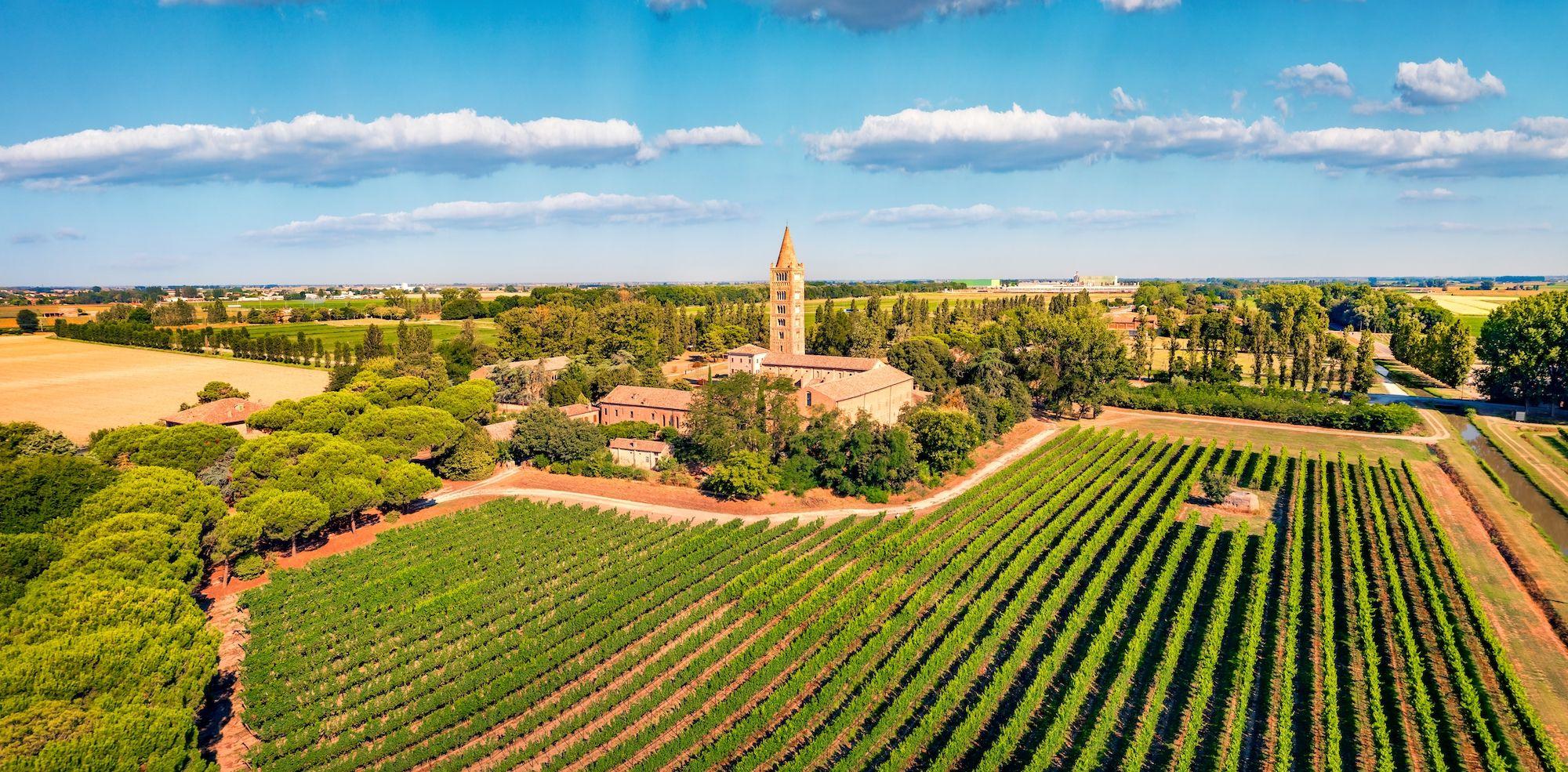
Panoramic view of Pomposa Abbey in summer, among the vineyards of the province of Ferrara. Andrew Mayovskyy / Shutterstock
A world of water: the Po Delta and Comacchio
The other great protagonist of the area is water, which bathes, colours and perfumes the enchanted lands of the Po Delta, among flamingos, castles and poignant sunsets, to be explored as much as possible by bicycle, on foot or by boat, before reaching the last stop: Comacchio.
Comacchio is an interesting town with a very compelling history, linked to water, on which it literally floats, and to salt, which has marked its steps and determined its events. Count its many bridges, admiring the most important one, the 17th-century Trepponti, and then rush off to take the best photographs of the trip in the Comacchio Valleys, the most important part of the Po Delta Regional Park, and in the poignant landscape of the Saline.
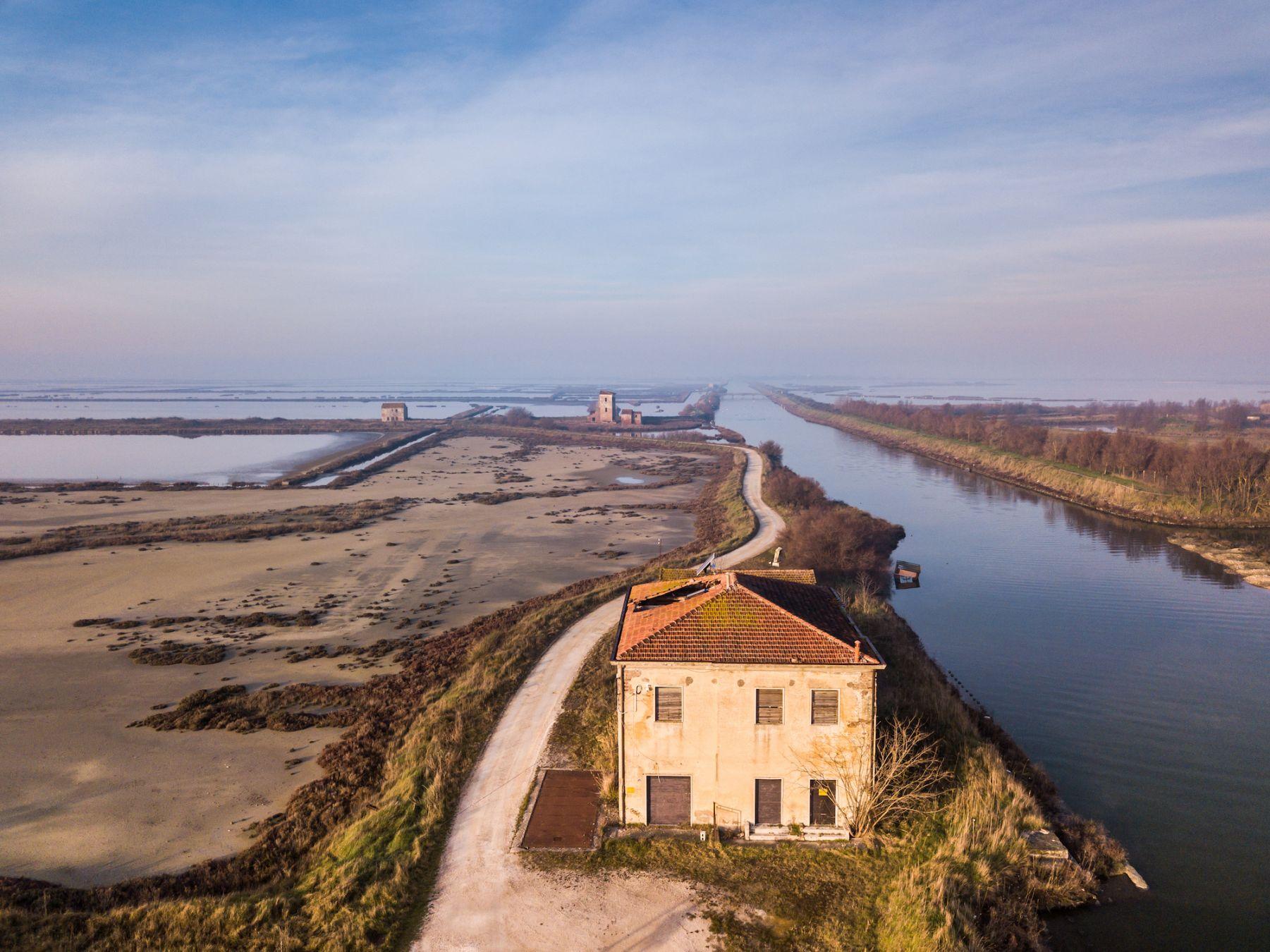
The striking landscape of the Comacchio Valleys in the Po Delta Regional Park. Cristian Ghisla / Shutterstock
If you happen to be in these parts between September and October, celebrate the area's most famous gastronomic product by participating in the Sagra dell'Anguilla (Eel Festival).
Recommended guides and products:
Travel guide
Emilia-Romagna
Read also: