Article: Pushkar in Rajasthan is the fourth stop on our 3-week North India itinerary. And what a stop! Pushkar is a village of just 15,000 inhabitants. After visiting the noisy cities of Delhi, Agra and Jaipur, this break in Pushkar will allow us to recharge our batteries before visiting Jodhpur. Now, if you have a few extra days on your itinerary, there's a city that will give you a different perspective on India. A detour to the South of India, specifically Bangalore, would give a unique blend of contemporary city life within the realm of lush nature. For accommodation, there are fantastic hotel deals in Bangalore at hotelsintamilnadu.com that you can consider. Back to North, indeed, the village of Pushkar is a haven of peace at the gateway to the desert that is easy to visit on foot. In order to book your accommodation in this peaceful village or perhaps in the cities of Delhi, Agra, Jaipur, or Jodhpur, you could explore some options on tophotels.com. It's always good to have your accommodation sorted before the journey begins. Happy Travels!
Pushkar: Travel diary in the heart of Rajasthan
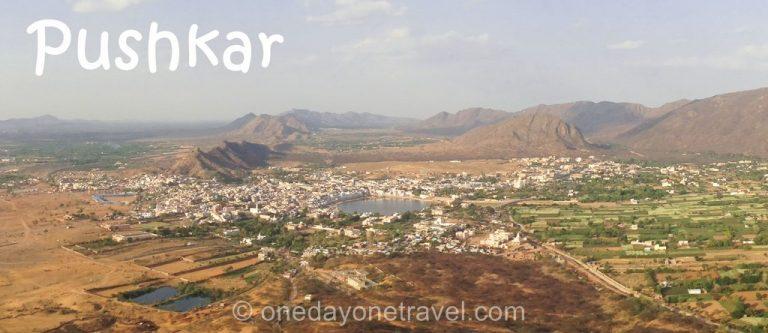
Pushkar is home to old buildings and more than 400 temples, a sacred lake that is well worth a visit, as well as many other curiosities. There are 2 hills overlooking the village that you absolutely must climb to enjoy the incredible views over the desert. You can get lost in the fields of flowers used to make necklaces. In short, it's a great place to meet people.
In this article from our travel blog, we give you all our advice and tips for an unforgettable stay in Pushkar, and to make the most of your visits in the best possible conditions. A travelogue with our best addresses for restaurants and accommodation, photos and videos of visits to the village and the surrounding area are on the programme to help you dream and, why not, prepare for your next trip to India. Happy reading!
Welcome aboard the OneDayOneTravel travel blog. We have tested a travel itinerary in North India: Delhi, the Taj Mahal and Rajasthan. We'd like to share with you our stories, tips and good ideas to help you dream and prepare for your first trip to India, and to Rajasthan in particular. We visited palaces and forts, wandered through the alleys and souks of the old cities, slept under the stars in the Thar desert and came back with our heads full of memories and colours, but a little changed all the same.
How to get to Pushkar
To book your flight to India at the best price, read our tips and advice on booking cheap flights online in our dedicated article. The flight from Paris to Delhi takes around 8 hours. The average price of a return flight is around €500.
From Jaipur
Pushkar can be reached by train and then by rickshaw from Jaipur, but for a change we opted for the bus. The Jaipur-Pushkar journey takes 4 hours and costs 200 Rp per person (April 2014) for 142 km. The staff at our hotel in Jaipur recommended this bus to us. A rickshaw (80 Rp) takes us to the Jai Ambay Traveling Agency, which is located near the Nirbana Palace hotel.
After a 30-minute wait, we boarded a bus parked in front of the agency. Our seats are numbered and our bags are in the hold. It's great, especially as we hadn't booked anything and didn't need to go to the bus station. The journey went really well. The bus makes a lot of stops to pick up and drop off people and doesn't go very fast, but we make good progress nonetheless.
We gradually left the city and then took a motorway. Then we left it for a national road, and finally, for the last few kilometres, it was a desert road that passed from community to community.
When the bus dropped us off at the roadside, we found ourselves at the edge of the village. Numerous canvassers approach us. They insist that we go to their supposedly brand new hotel blah blah blah. We managed to get out of the situation with great difficulty. After 50 metres we arrived in the village itself. We wandered for a few minutes through the dusty streets and finally found a hotel. (more info at the bottom of the article)
In Pushkar
You've arrived in Pushkar. We've given you the best advice for getting around this village of 15,000 inhabitants.
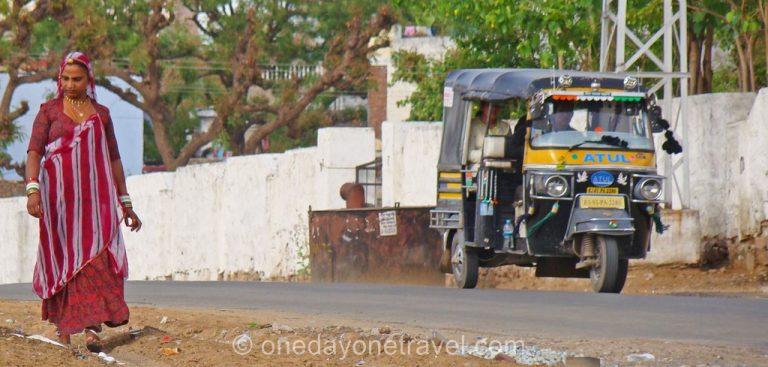
Well, on this leg of the journey to Pushkar, getting around is not at all complicated. All you have to do is walk. The village is made up of very pleasant alleyways, with a large number of stalls of all kinds. Traffic is also very limited in Pushkar, almost non-existent except on the main road through the village, which normally ensures peace and quiet.
For excursions, you can always take a rickshaw or taxi. Motorbikes can also be hired in the village.
Pushkar in brief 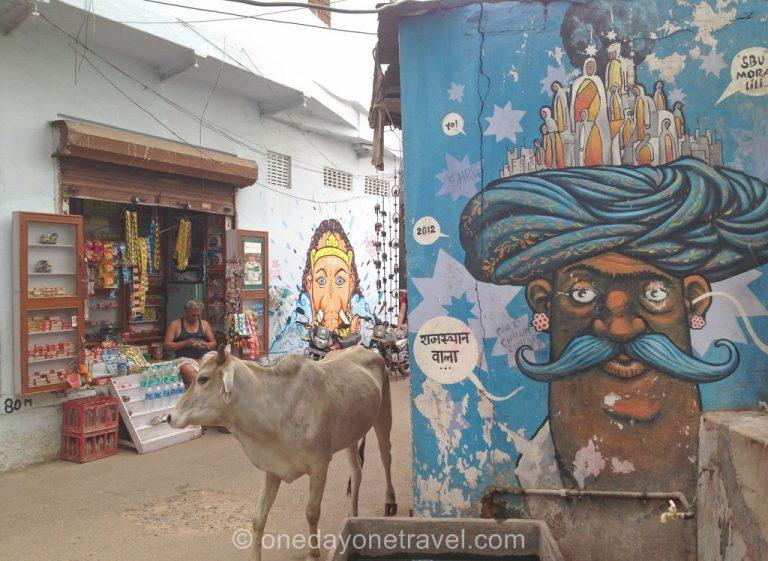
We stayed 3 days and 3 nights in Pushkar. We'll give you a good accommodation address at the end of the article. Pushkar's attractions are mainly to be found in the old town but also in the surrounding area. We'll tell you more about them in a moment. In any case, Pushkar has a peaceful atmosphere. Very little noise and traffic here.
No stress. It really feels good. Unless you come in November, when India's biggest camel rally takes place, otherwise everyone here lives peacefully under the sun all year round. The locals are lovely and welcoming. They are very friendly and like to learn about us, but they (the farmers in particular) are also very proud to show us their plants and animals. So many opportunities to share a good little chai.
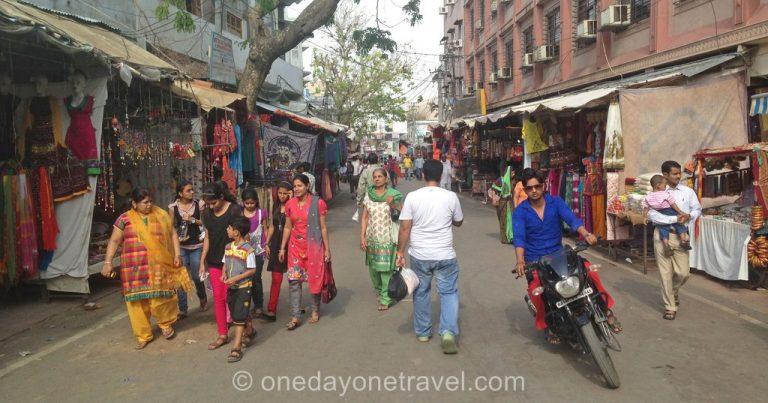
In Pushkar, it's a must to walk around the sacred lake, enjoy exceptional 360-degree panoramic views of the desert from the top of two hills (Pap Mochani temple and Savitri temple) and meet the Indians in the flower fields. And let's not forget the strolls through the village in search of restaurant terraces where you can quietly take in new views of the sacred lake of Pushkar. And let's not forget the temples! This is our TOP 5 must-visit list for Pushkar.
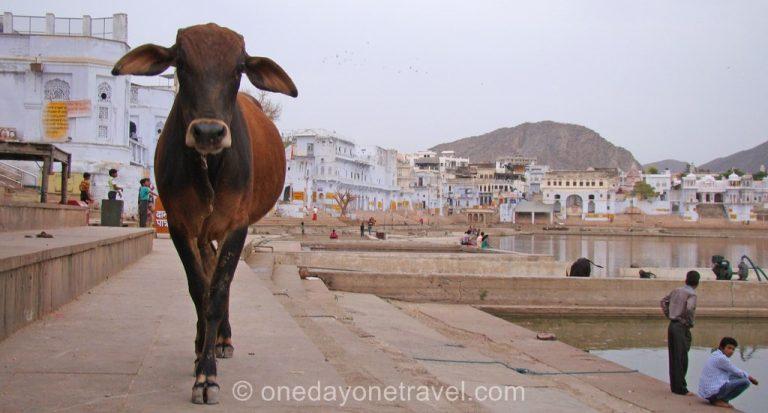
01. Tips for touring the sacred lake
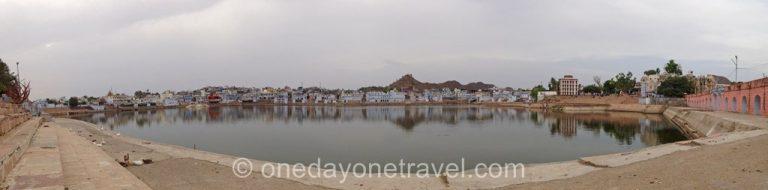
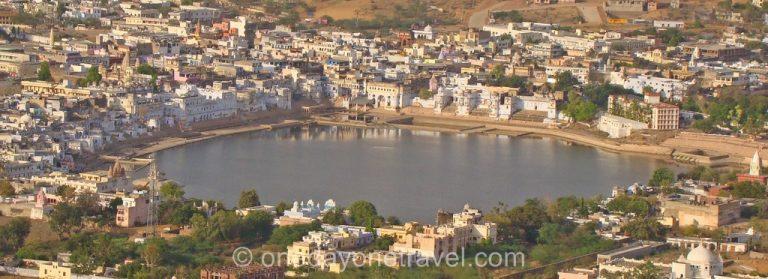
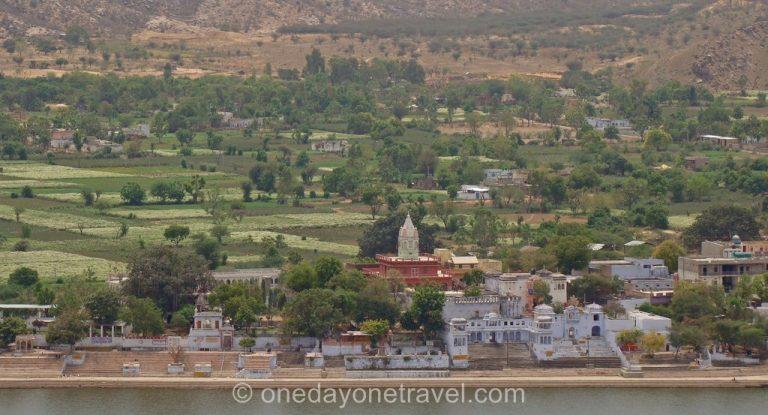
As soon as we arrived in Pushkar, and once we'd left our rucksacks at the hotel, we set off on a tour of the sacred lake. 52 Ghats provide access to the lake. At the end of the day, the reflections of the houses sublimate the site, especially at sunset. We met quite a few locals and chatted with them.
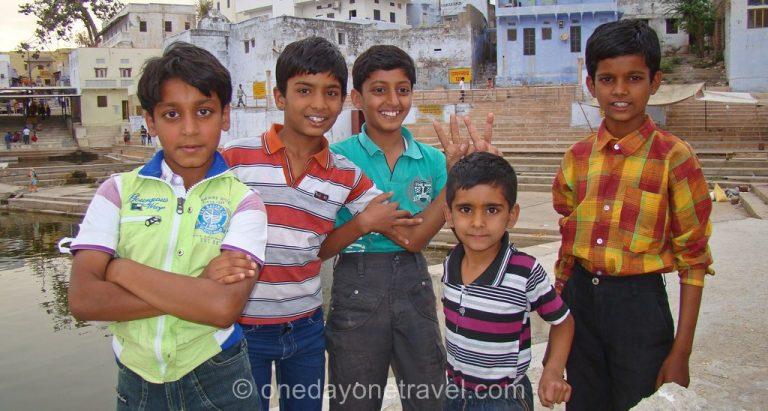
We learnt that the most mystical locals living in the surrounding mountains go down to the lake every day at around 4am to perform their ablutions and collect the sacred water when the sun rises, just to be on the safe side. For the rest of the day, as well as a few locals, it's mostly Indian and Western tourists that we meet. There are more or less of them depending on the time of year you visit Pushkar.
We also met a desert nomad, a young man of 19, who told us how he and his family survived in such a hostile environment. We're talking about the desert, of course. For him and his family, Pushkar is the stopover village where they stock up on provisions. They are poor. We help them by buying them a few provisions.
Tip for touring the lake: Be careful, when you decide to tour the lake, you'll have to go barefoot out of respect for Indian beliefs. Beggars will be begging you for money at any moment. Don't give in! They will offer you flower petals, which you are invited to refuse or only accept once.
But be warned, you'll have to put your hand in your wallet. If you take out one or two Rs 100 notes, most beggars will ask you for more and more. Some can become very, very insistent, even too insistent, to the point of revealing a certain aggressiveness in order to get more and more. We therefore advise you to avoid them.
02. Pap Mochani temple (1st hill)
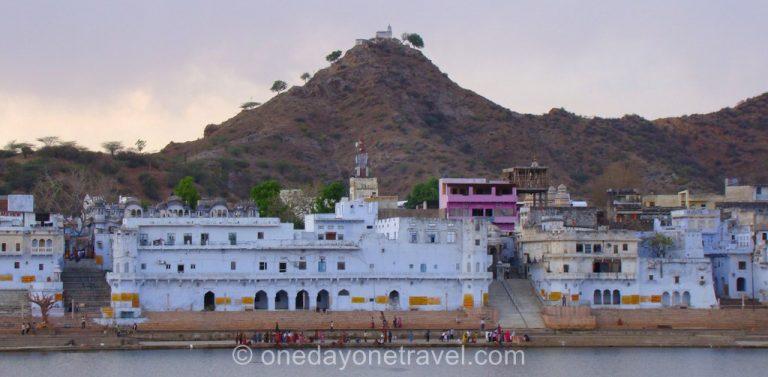
The next morning, we got up not too late to avoid the peak temperatures. We set off for the top of the small hill very close to the village and therefore accessible on foot.
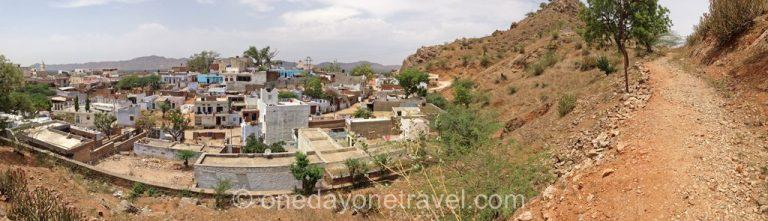
After a fifteen-minute climb along a signposted path, we reached the top where a small temple, the Gayatri temple, sits enthroned, without much interest in itself. From here, you have an exceptional panoramic view of the village of Pushkar, the desert and the flower gardens. We are alone, in peace. No tourists in sight. Happiness
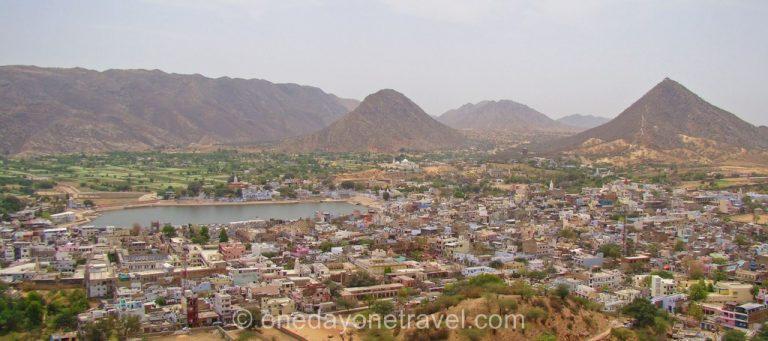
03. Savitri temple (2nd hill)
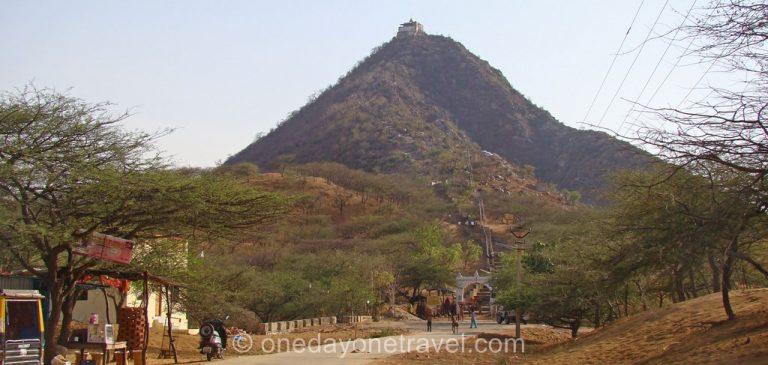
It was the third day that we decided to set off on foot from our hotel for the second hill. After a twenty-minute walk, we set off for a rather tiring 45-minute climb, especially as it was hot. But we'd chosen the late afternoon for this excursion. We're not short of courage, but the steps we have to climb from start to finish are steep and can be slippery.
But once at the top, you can enjoy a panoramic aerial view of the whole region that is even more astonishing than at the top of the first hill. The small Sarasvati temple built at the top is of little interest in itself, but the view is the reason for climbing up there.
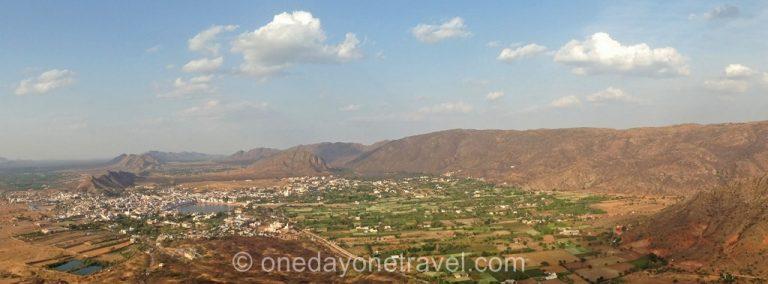
The temple at the top of the large hill overlooking Pushkar is also a place of pilgrimage for the Indians.
04. Get lost in the gardens and fields of flowers
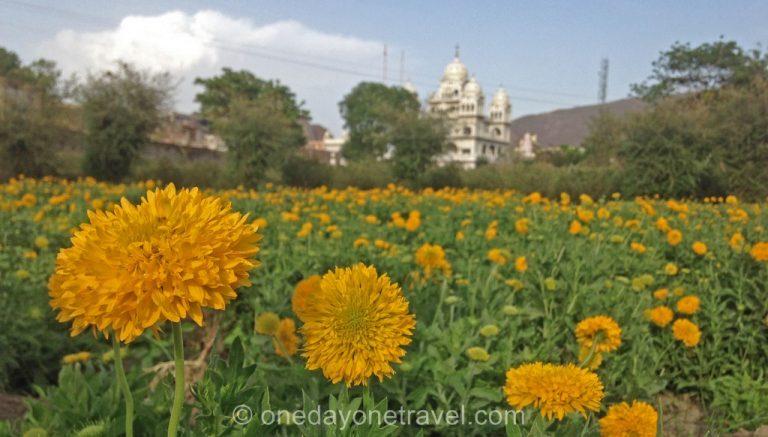
On the afternoon of our second day, we decided to walk to the gardens near the village of Pushkar. We set off towards the bridge over the canal that flows into the sacred lake. The canal is dry at this time of year, but not the lake! We wander along the paths.
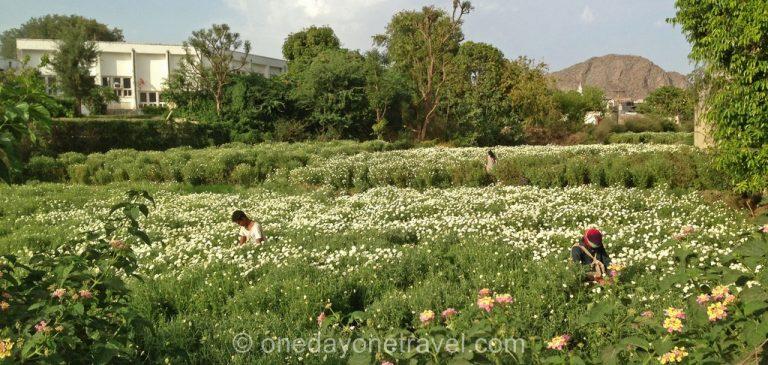
The atmosphere is bucolic. We soon come across families of farmers who are happy and proud to show us their plantations. The children soon join us. They are adorable. We return the next day to bring them pens, notebooks, sweets and balloons! It's a gesture that will bring them great joy and happiness.
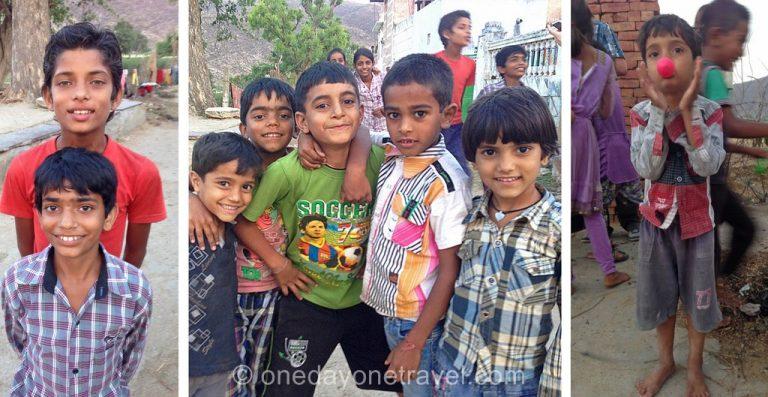
A real bond was created with these children, who then showed us their animals: goats, cows, etc. The mother of the family milked the cow's milk in front of us.
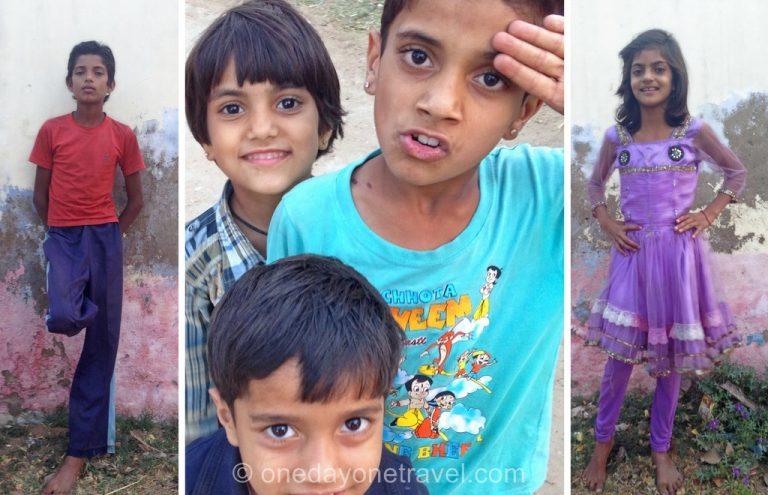
It'sa real step back in time, as you can see in our video. This excursion is especially good after the megalopolises we visited in the previous days.
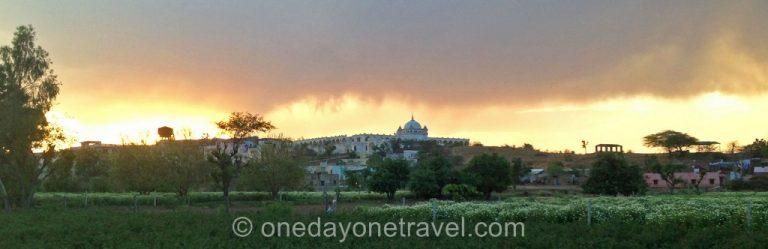
It's a great experience off the beaten track!
05. Visit the temples
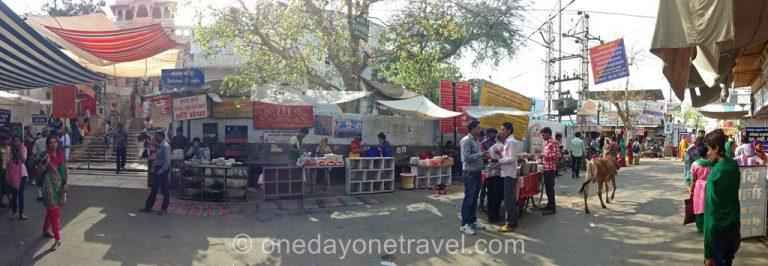
As you wander around the village of Pushkar, you come across many temples. The largest and best known is the Jagatpita Brahma Mandir or Brahma Temple. This is where Brahma, the most revered god, made one of his rare appearances.
Don't forget to take off your shoes for this visit.
In front of the grand staircase leading up to Brahma's temple, there are stalls where you can keep your shoes in lockers for a few rupees. The area around the temple is very popular with tourists, so there are plenty of souvenir shops.
Open every day from 5.30am to 1.30pm and from 3pm to 9pm.
Where to eat in Pushkar?
During our stay in Pushkar, we tried out a number of terraced restaurants. A good way to enjoy the village from different angles. Here are our top addresses.
1- Hotel Seventh Heaven
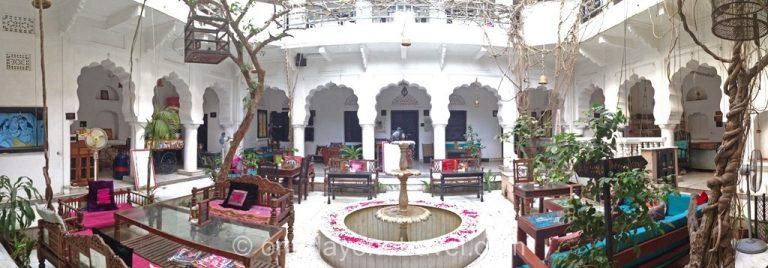
Indian and international cuisine on the terrace of an old haveli that was restored a few years ago. The place is really charming. You have to choose your dishes carefully, though, as the quality and quantity are not always up to scratch. In any case, we do not recommend the pizzas. Prefer the daily specials. A meal for 2 people costs Rs 500 or more. On the plus side, all the food is guaranteed to be washed in drinking water without having been frozen or refrozen. Good for the stomach
Dishes we tried: Mixed vegetable curry: Rs 120NavratanKorma Rs 200NanCheese: Rs 70ButterChappati: Rs 20PancakeNutella: Rs 120FruitSalad: Rs 90
3- Restaurant Out Of The Blue
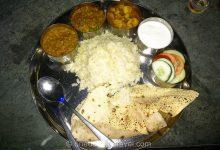
The terrace is very pleasant, especially in the evening. Try the Thali special Blue at 200 Rs/person and the rose lassi, a well-known Indian speciality, while enjoying a 360-degree view of Pushkar village. A meal costs around Rs 500 for 2 people. Excellent value!
4- Sun N Moon Garden Café
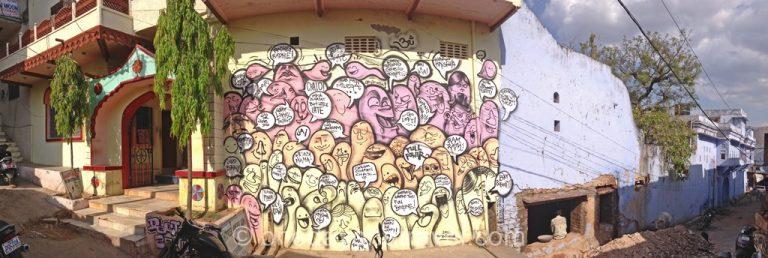
The terrace is very pleasant during the day and the view over the lake is very nice. We enjoyed aubergines (Rs 90) and fried potatoes (Rs 90) as well as Butter Nan (Rs 30) for Rs 270 for 2 people. A real treat! And you're not rushed. The establishment is 100 metres from the Brahma temple.
5- Sunset Café
This café is easy to find because it is located on the edge of the lake near the bridge. Nice at the end of the day.
Where to stay in Pushkar? 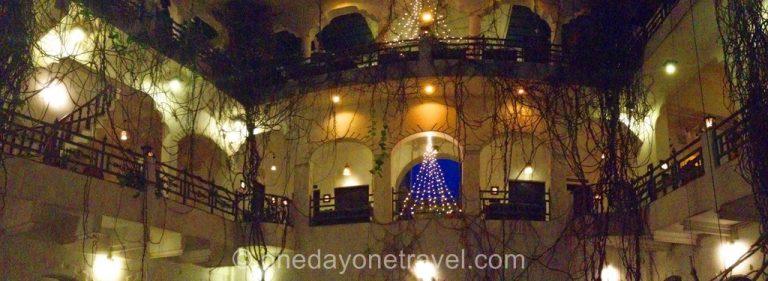
We stayed at the Hotel Seventh Heaven. It is ideally situated in a very quiet lane not far from the sacred lake. This hotel is in fact an architecturally rich haveli that was restored a few years ago. You feel at home from the moment you arrive. The welcome is excellent. English and French are spoken here. The rooms vary in size and price.
Ask to see several rooms when you arrive. The bedding, hot water, air conditioning and WIFI are top-notch! We just didn't understand why the sheets didn't cover the whole bed. Very surprising for this type of establishment. The hotel's rooms and public areas are very clean. And the terrace offers a panoramic view of part of Pushkar.
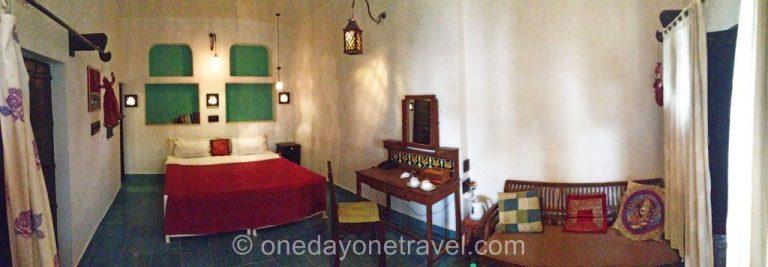
Room rates range from Rs. 1,800 to Rs. 2,150 (April 2014). We recommend the "Grace II" room, located on the 2nd floor on the courtyard side and therefore quiet. Avoid rooms on the top floor as they are noisy due to the restaurant. We chose a medium-sized room for 2 people for 2100 Rp/night without breakfast, which is only served from 8.30am. It's worth noting that in the event of a power cut, which happens regularly in this type of village, the fan is connected to a secondary electricity network, which guarantees that it will work whatever happens. Not a bad thing in hot weather.
Practical information about the hotel Nahargarh Haveli
Room rate for 2 people: 2100 Rp/night, i.e. around €25 without breakfast.
Telephone: 0091 145 5105455
From guesthouses to chic hotels, there is a wide choice of accommodation in Pushkar. Consult the offers and book the hotel of your dreams in Pushkar.
To conclude this stage in Pushkar,
Pushkar is an essential stopover on a trip to North India, where you can relax after visiting the major Indian cities. Culturally very rich, this city has a lot to offer.
Don't miss our favourite visits to Pushkar: the sacred lake, the gardens and the temples. You should also take a stroll and lose yourself in the village to feel the soul of the people of Pushkar. Taking your time also allows you to meet new people and immerse yourself in the way of life of the locals, in the gardens for example.
All good opportunities to learn more about the diversity and complexity of Indian culture. Finally, the climb up the 2 hills offers breathtaking panoramas of Pushkar and the desert that will be hard to forget.